Absence
Illinois Attendance Recovery Slowed in 2024-25
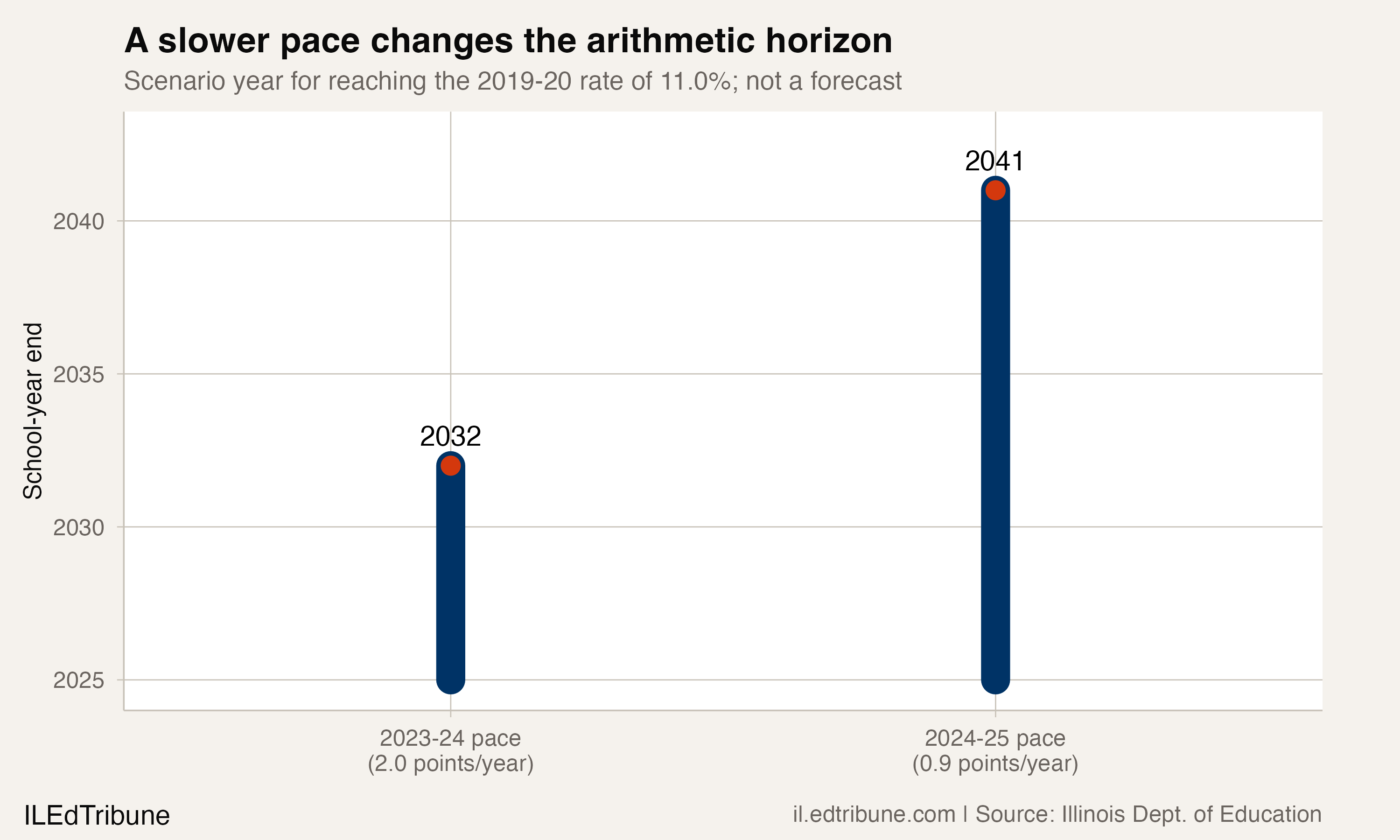
Illinois's chronic absenteeism rate improved by 0.9 percentage points in 2024-25, down from a 2.0-point improvement the year before.
Prairie State Education Coverage, Driven by Data
Page 3 of 5
Illinois's chronic absenteeism rate improved by 0.9 percentage points in 2024-25, down from a 2.0-point improvement the year before.
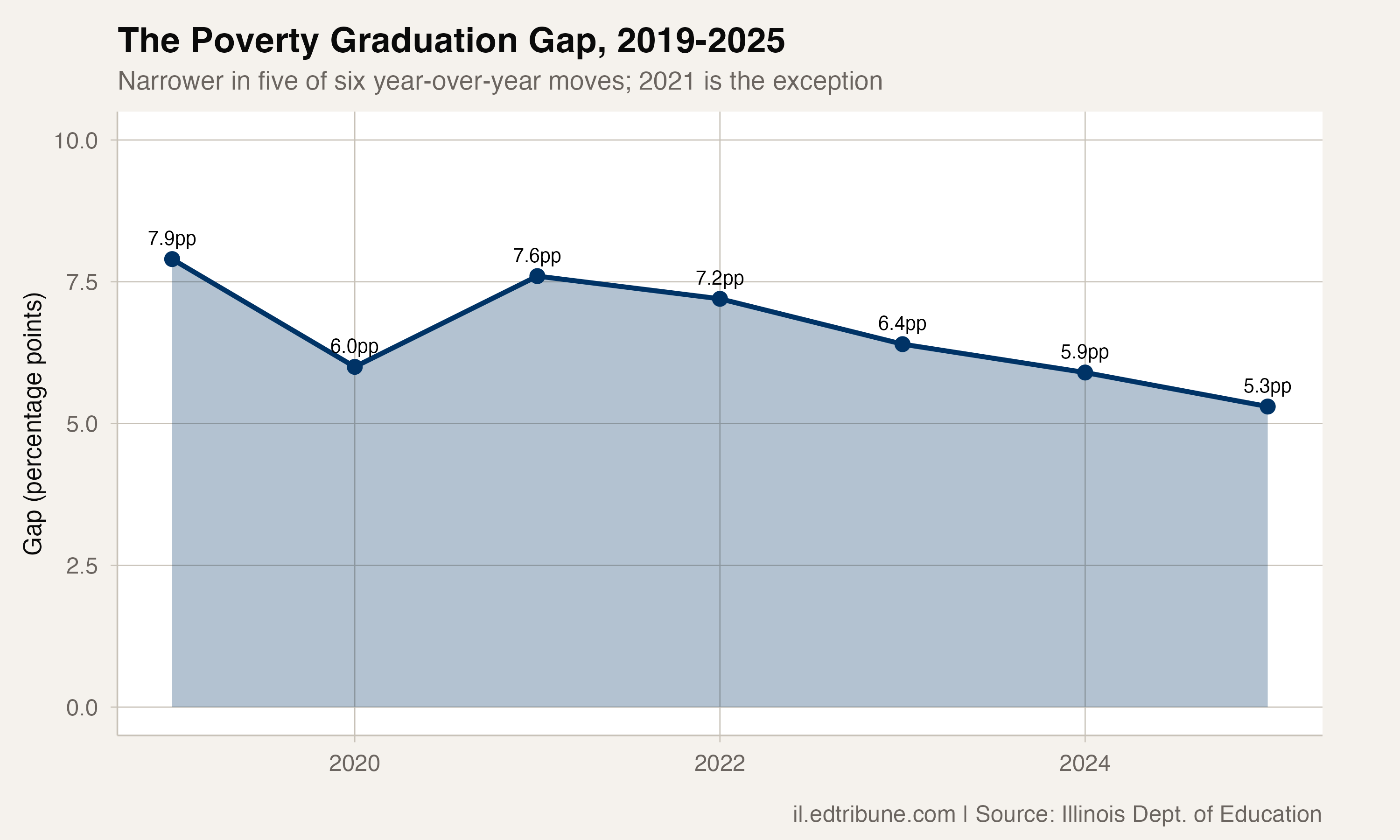
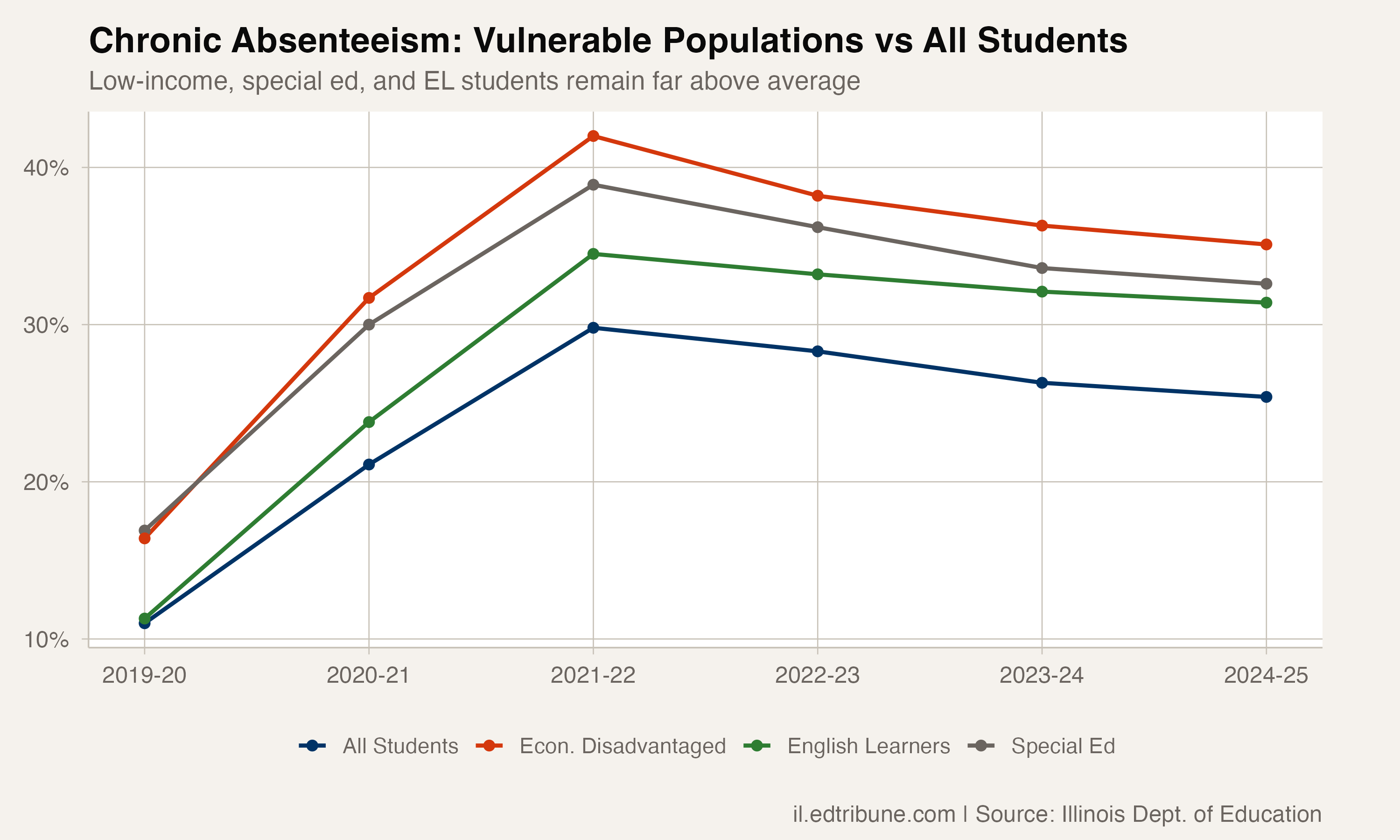
The gap between all Illinois students and economically disadvantaged students narrowed from 7.9 to 5.3 percentage points between 2019 and 2025, a 33% reduction built on a 5.4-point gain for economically disadvantaged students against 2.8 points for all students.
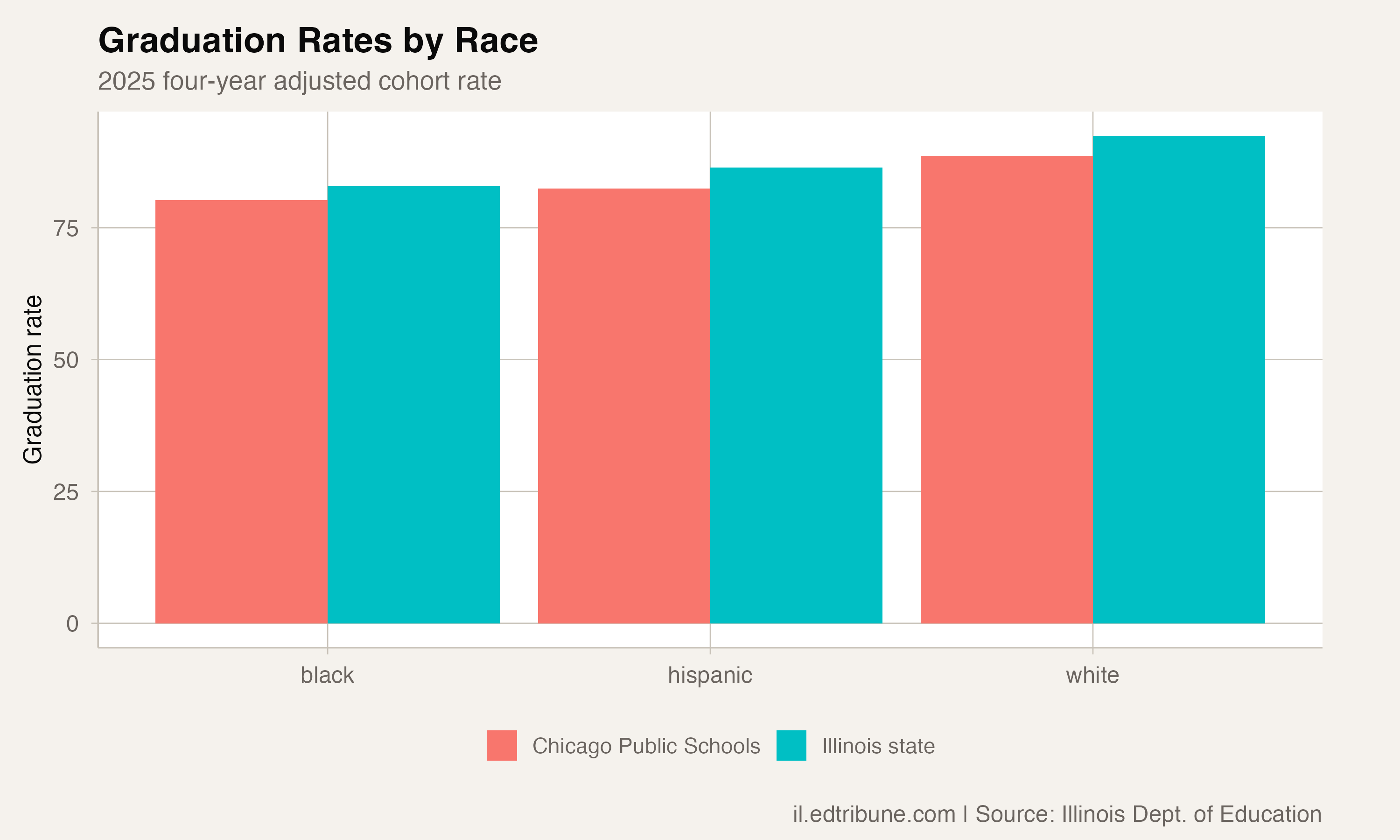
Chicago Public Schools graduated 82.5% of students in 2025, up 6 points since 2019 but still trailing the state average by 6.5 points. CPS's White-Black gap is narrower than the state's.
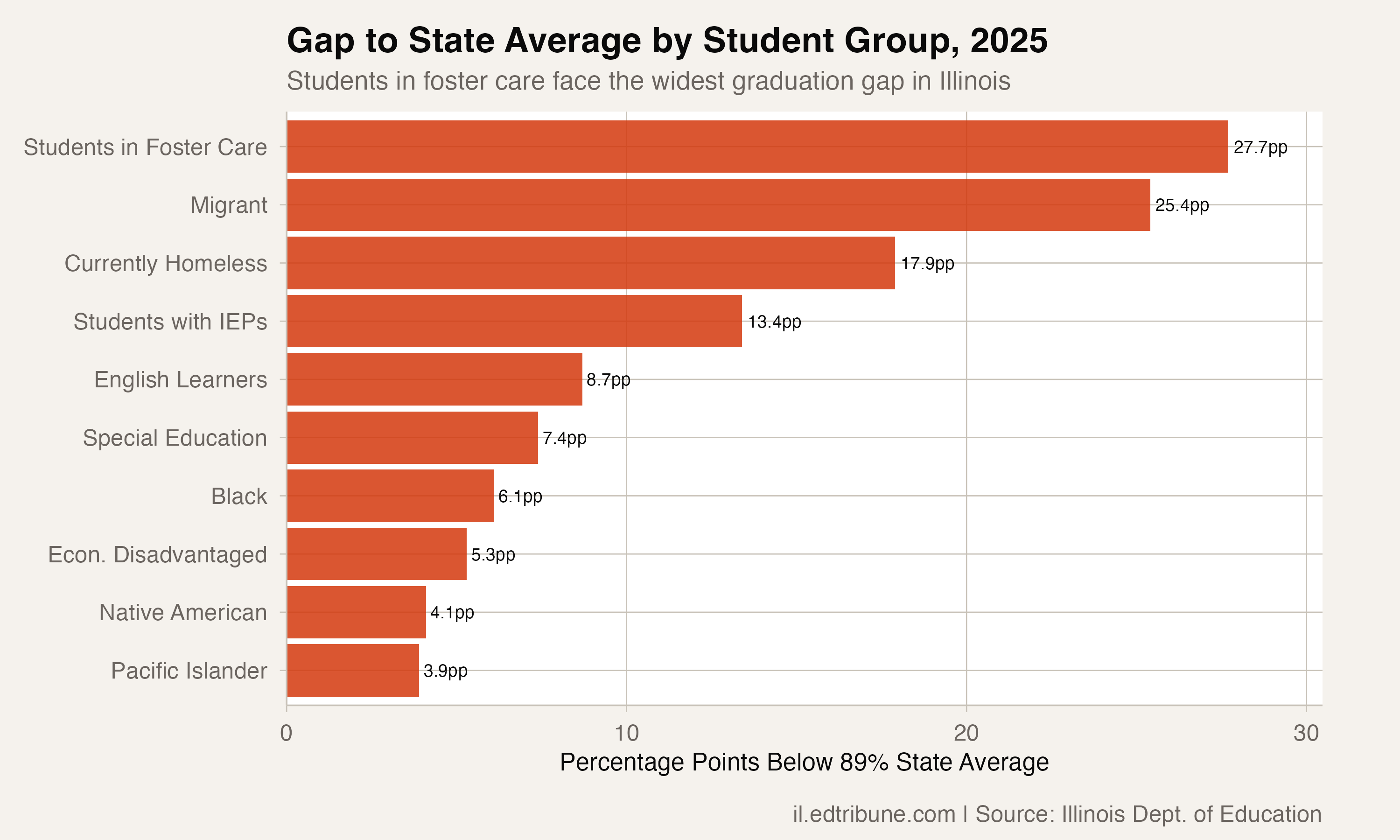
Students in foster care graduate at 61.3% in Illinois, nearly 28 points below the state average, the widest gap of any student group. In Chicago, the rate drops to 43.9%.
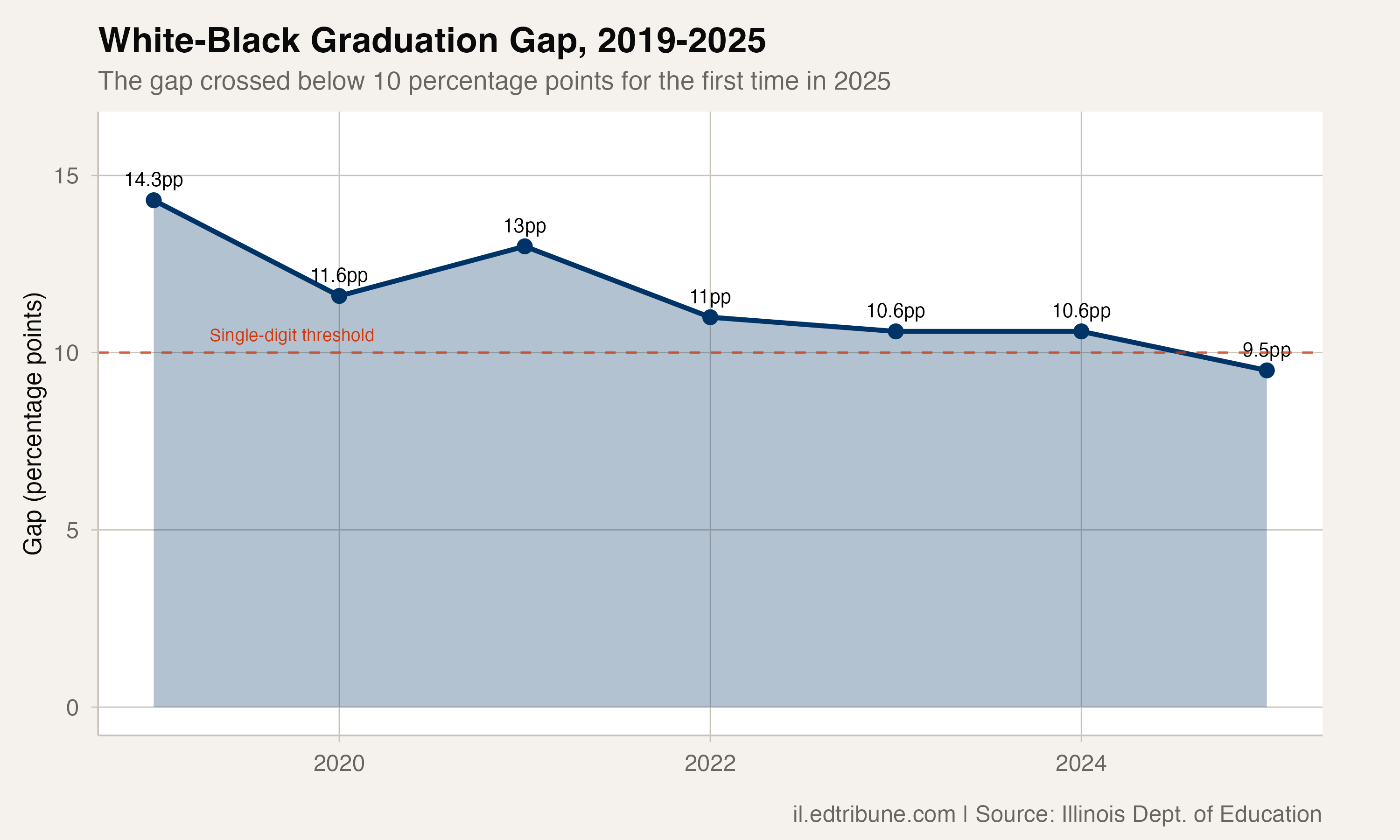
Black students' graduation rate gained 6.4 points from 2019 to 2025, narrowing Illinois' white-Black gap from 14.3 to 9.5 points.
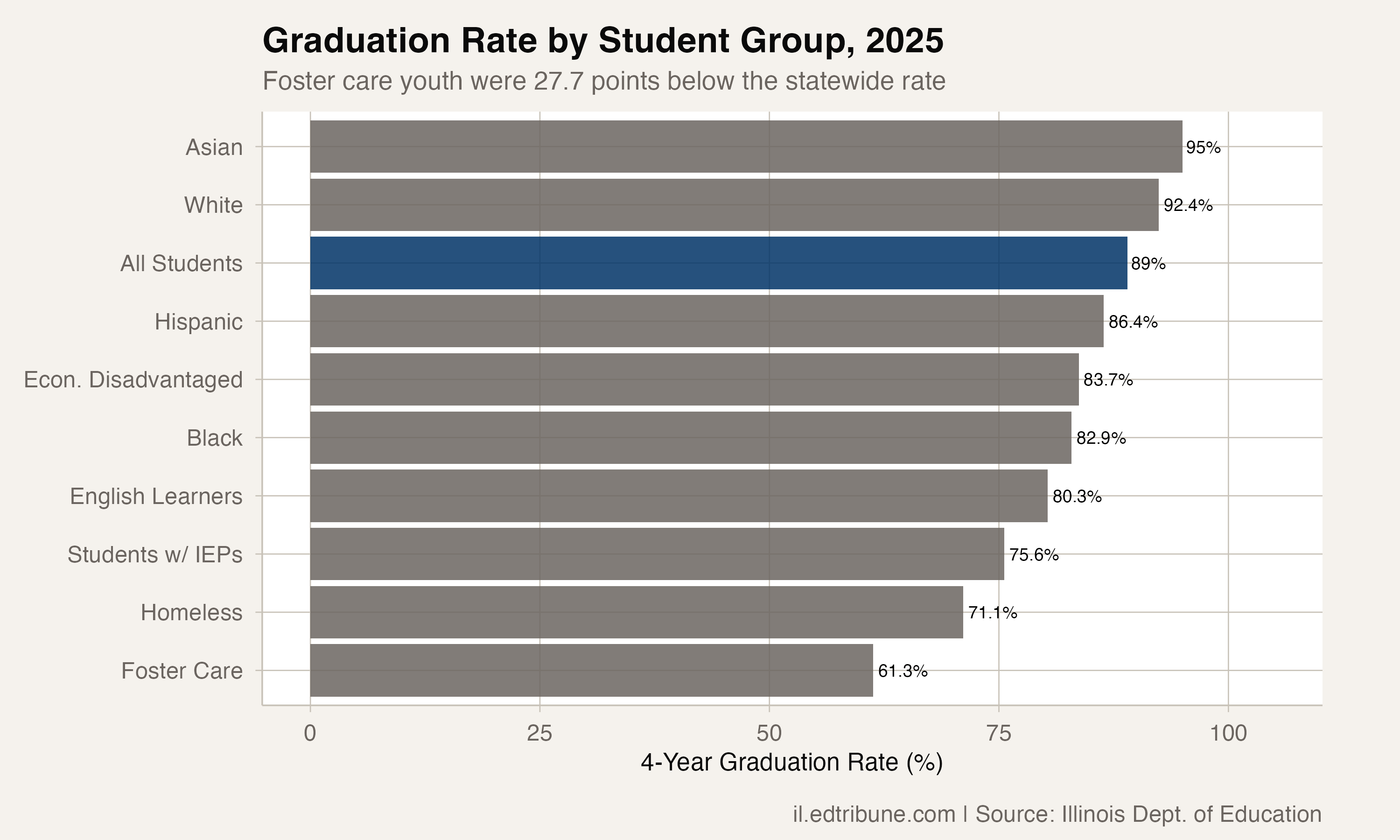
Illinois reached an 89.0% four-year graduation rate in 2025, the highest point in the state's comparable 2019-2025 graduation-rate series and 1.0 point below 90%.
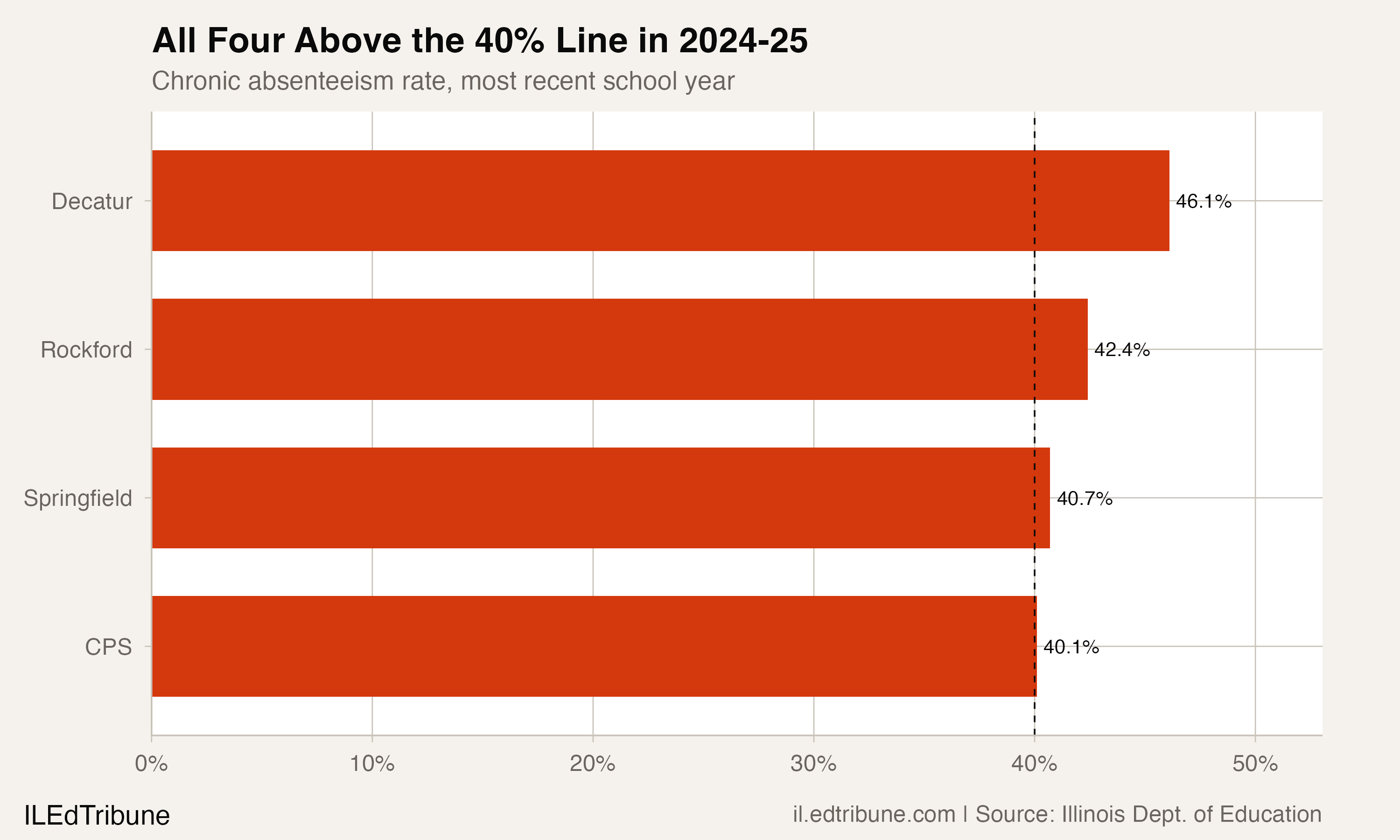
Decatur, Rockford, Springfield and CPS each reported chronic absenteeism above 40% in 2024-25, but their seven-year paths differed.
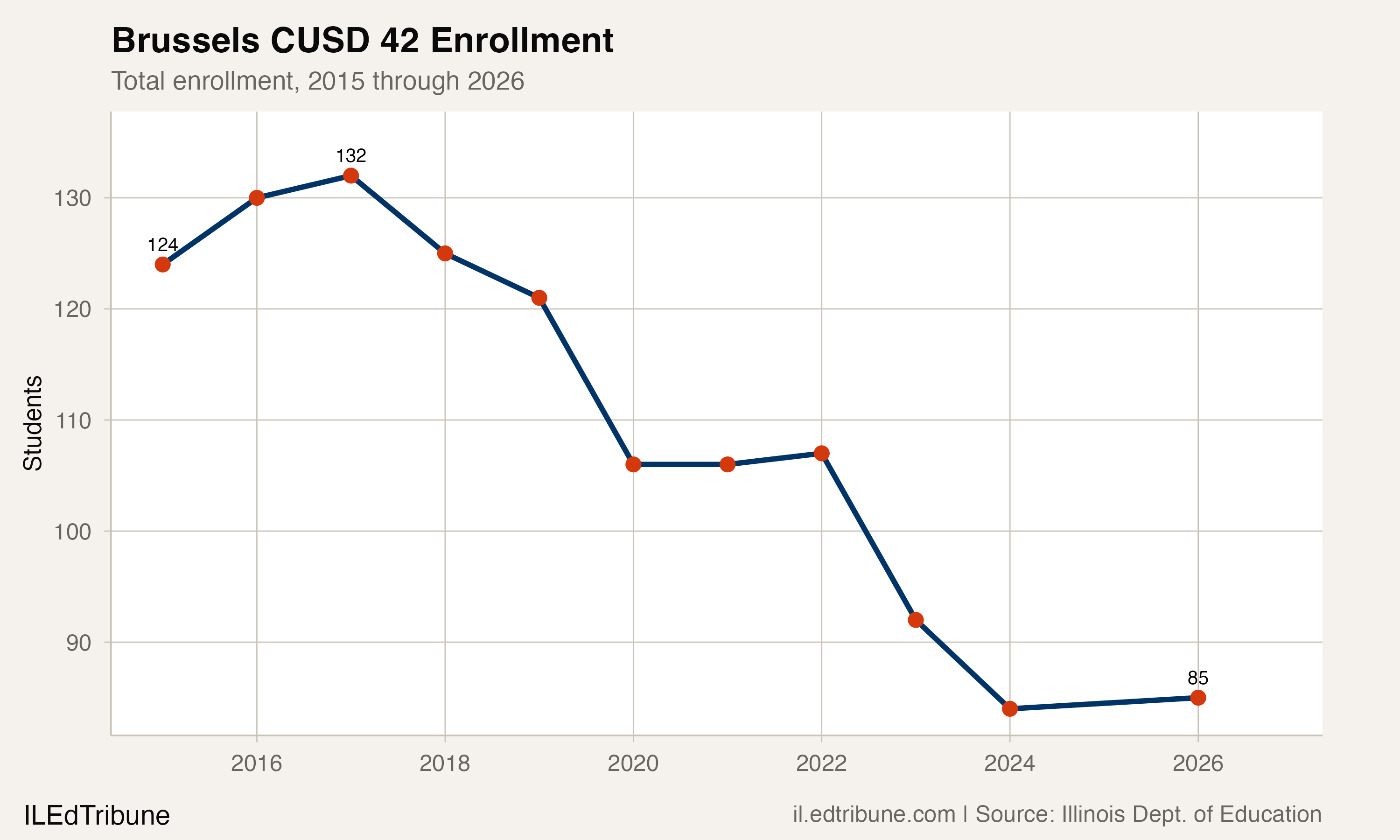
Pam Long says Brussels' size is its strength as she begins leading the small Calhoun County district as superintendent.
Dr. Brett Gallini says he advanced his start date to avoid another transition, then spent his first weeks visiting schools and classrooms across CCSD59.

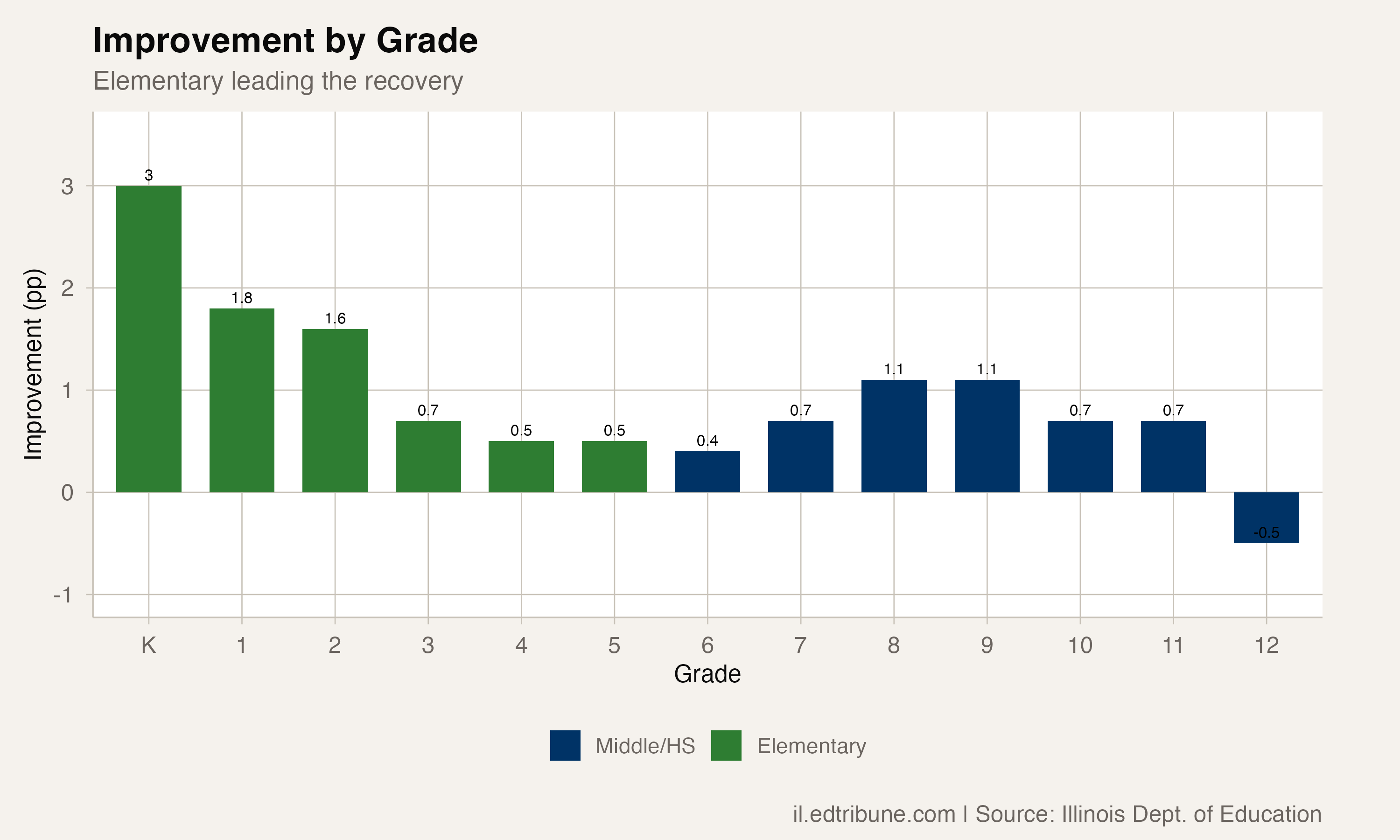
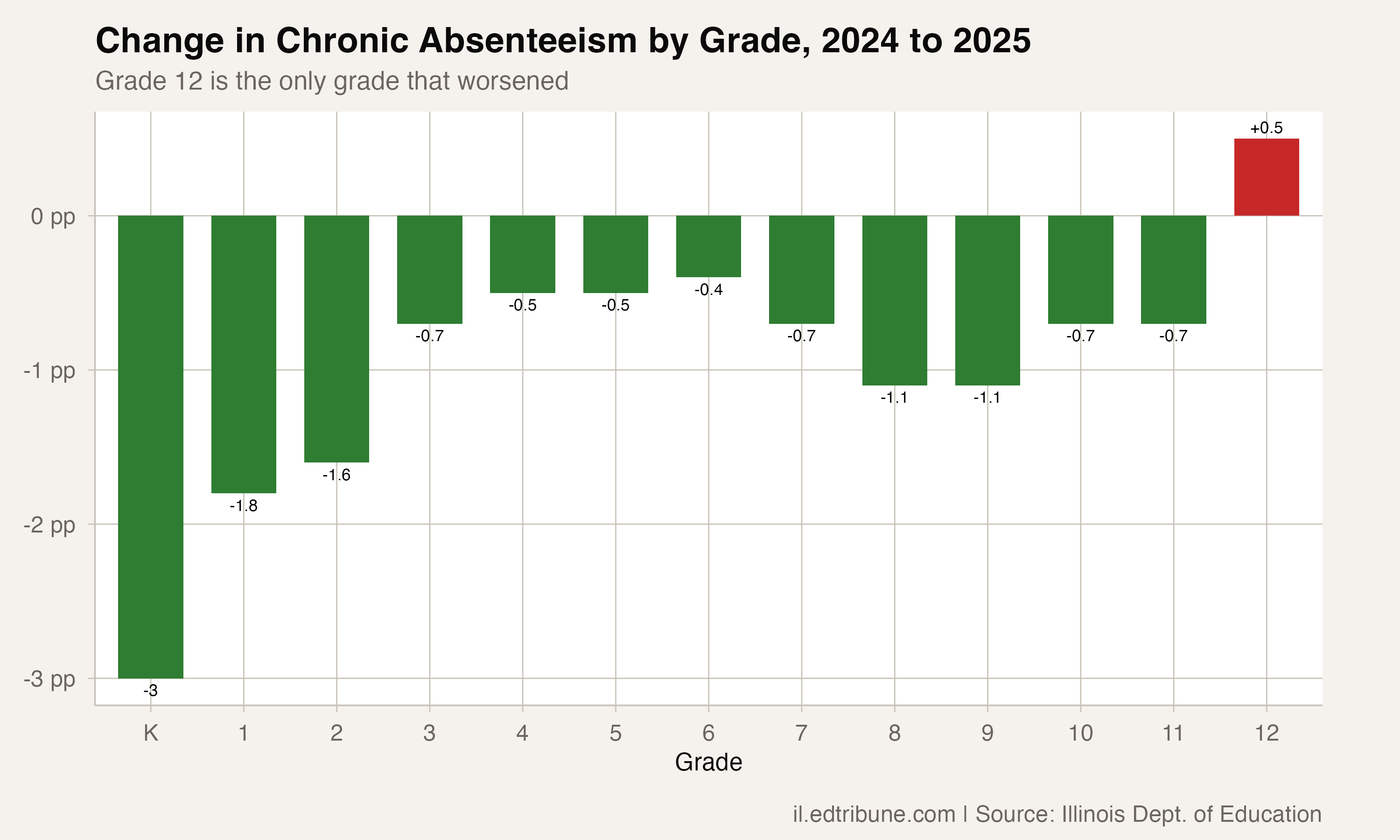
Kindergarten chronic absenteeism fell from 29.1% to 26.1%, the largest improvement of any grade. Elementary grades posted the strongest average improvement.
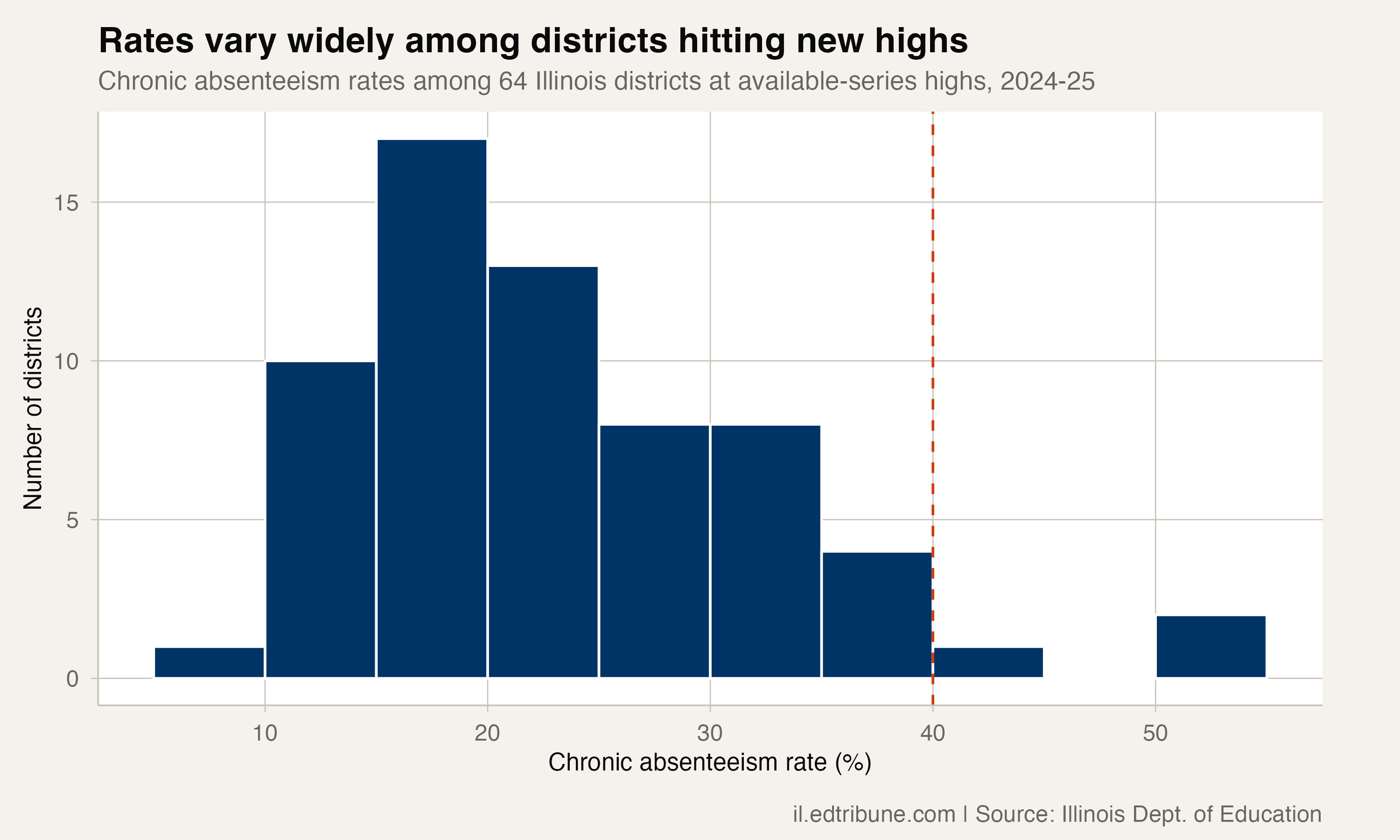
Despite statewide improvement from 26.3% to 25.4%, 64 districts recorded their highest chronic absence rates in the available 2018-19 to 2024-25 series.
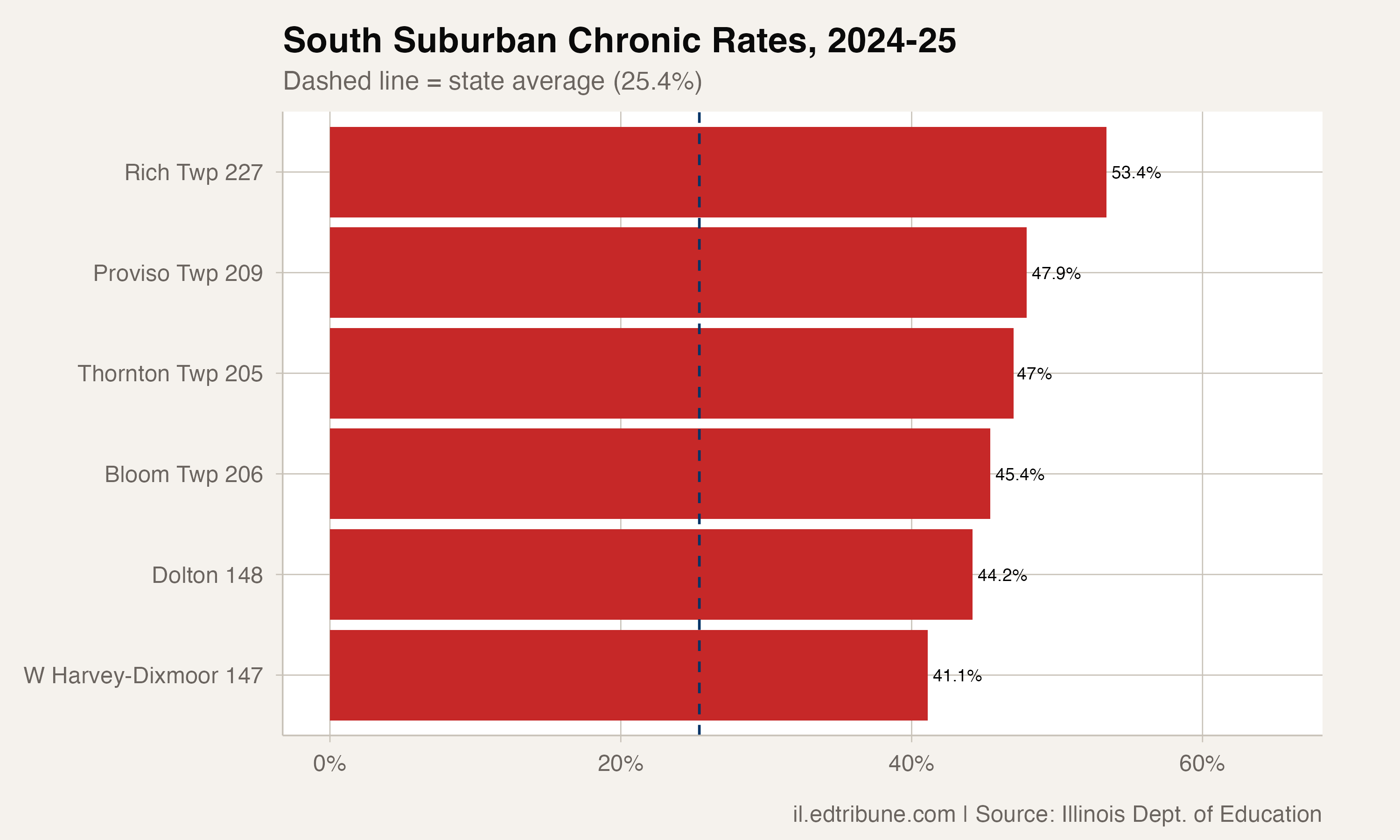
A cluster of suburban Cook County high school districts reports chronic absenteeism between 45% and 53%, rivaling or exceeding Chicago Public Schools' 40.1% rate.
Every grade from K through 11 improved its chronic absenteeism rate in 2024-25. Seniors bucked the trend, worsening to 41.5% — a 23-point gap from elementary school.
35.1% of students who are economically disadvantaged miss too much school, nearly 10 points above the state average. Special education and English learner rates are similarly elevated.
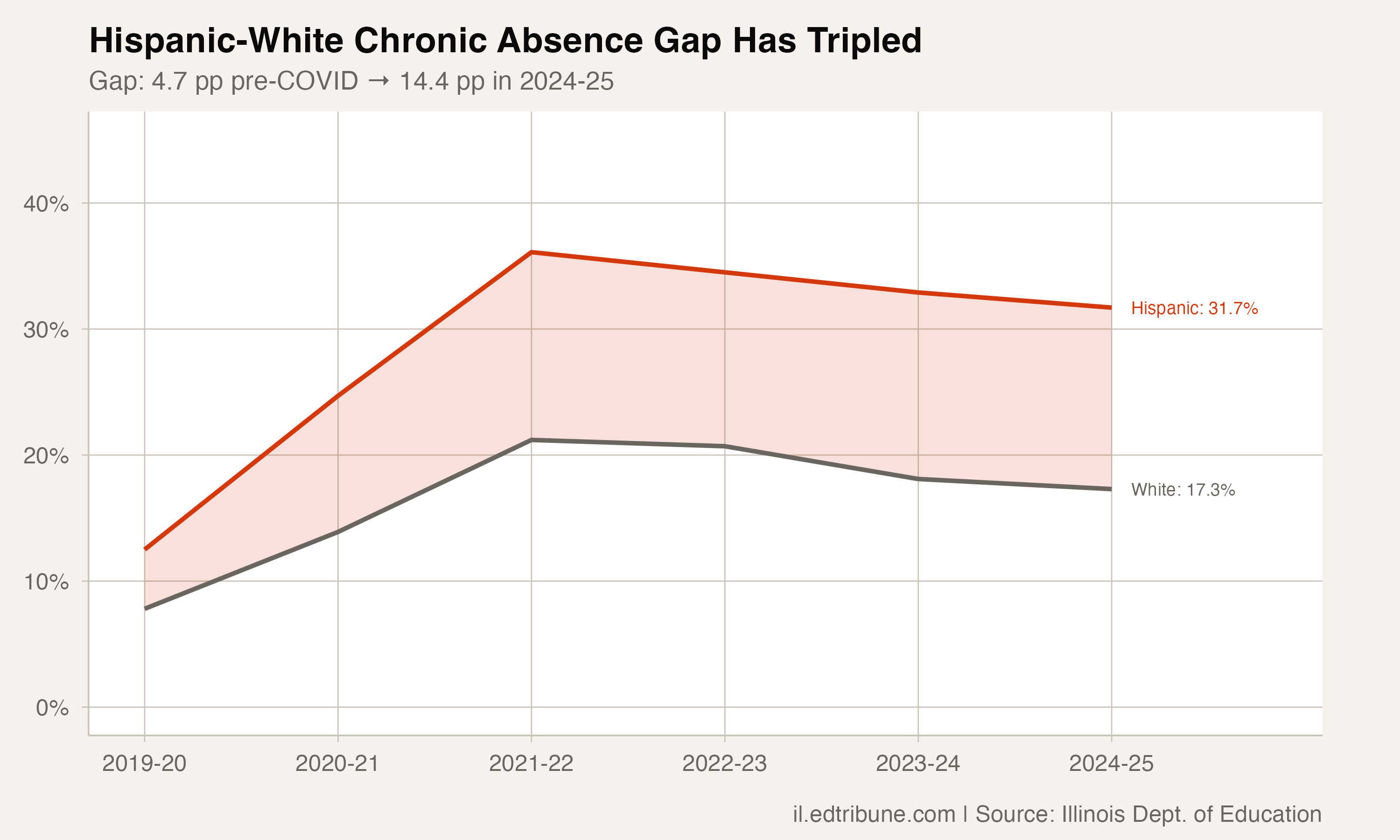
Hispanic chronic absenteeism has fallen from 36.1% at its 2022 peak to 31.7%, but the gap with white students has held at about 14 points for four years.