Correction (July 21, 2026): An earlier version said current kindergartners were four years from the 8th-to-9th-grade transition. They are roughly eight school years from entering ninth grade. The aggregate data also do not establish why families' attendance changed or predict that this cohort will retain its current rate.
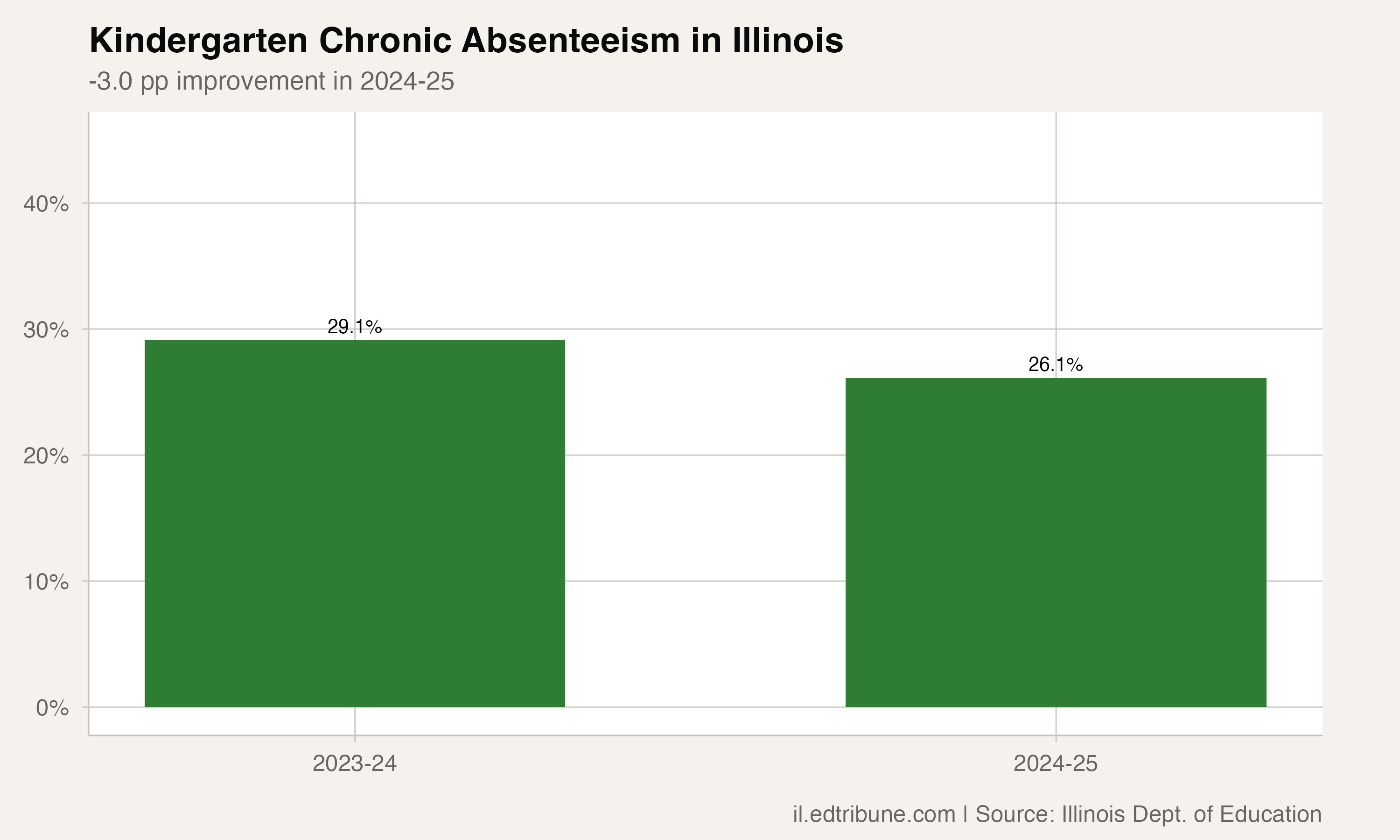
In a sea of sobering attendance data, kindergarten stands out. Illinois kindergarten chronic absenteeism dropped from 29.1% to 26.1% between 2023-24 and 2024-25 — a 3.0 percentage point improvement that is more than three times the statewide 0.9-point improvement and the largest gain of any grade level.
The kindergarten reading describes a new cohort at the start of formal schooling. The aggregate state file does not identify why its chronic absenteeism rate fell.
Elementary is pulling the state forward
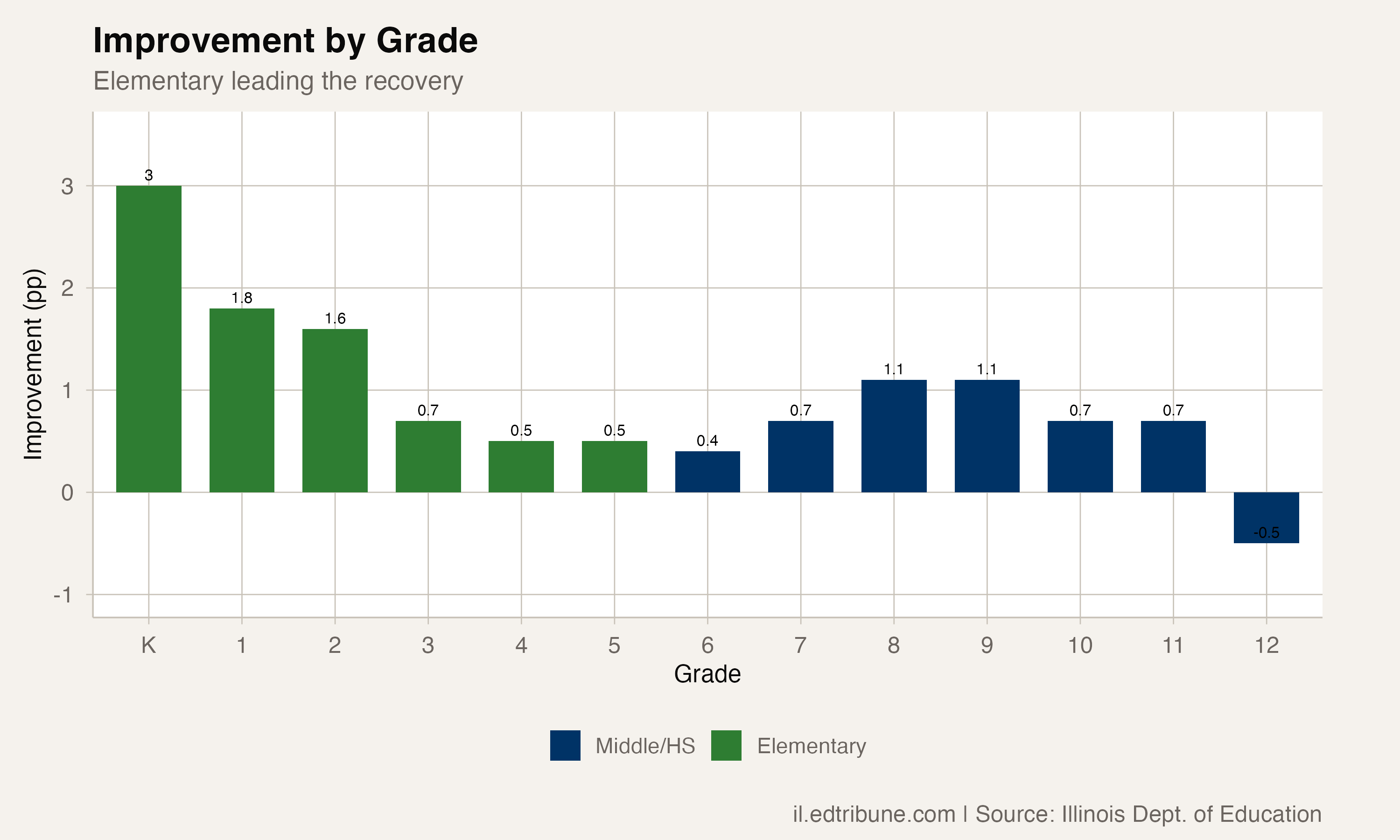
The three largest improvements were in kindergarten through second grade. First grade improved 1.8 points. Second grade gained 1.6 points. By 5th grade, the improvement narrows to 0.5 points. Middle school grades improved 0.4 to 1.1 points. High school grades improved 0.7 to 1.1 points — except 12th grade, which worsened.
Elementary schools, taken as a group, improved their mean chronic rate by 1.4 percentage points. Middle schools improved by 0.7 points. High schools improved by 0.5 points (if you exclude 12th grade's worsening, the remaining grades improved by roughly 0.8 points).
Still a troubling number
The improvement is genuine, but 26.1% still means more than one in four kindergartners met Illinois's chronic-absence threshold.
What the K improvement signals
Kindergarten posted the largest one-year improvement in the grade-level file. Kindergarten through second grade posted the three largest improvements, while 12th grade worsened.
The current data also show a 4.3-point difference between eighth- and ninth-grade chronic absenteeism rates. This is a cross-sectional comparison of different students, not a forecast for today's kindergartners; the file cannot show whether their current attendance pattern will persist as they move through school.
Detailed code that reproduces the analysis and figures in this article is available exclusively to EdTribune subscribers.
Discussion
Sign in to join the discussion.
Loading comments...