Katie Reynolds Begins District 103 Tenure by Asking What Comes Next
The longtime curriculum leader is opening a strategic-planning process as District 103 weighs a smaller entering class, new technology, and the skills students will need next.

Prairie State Education Coverage, Driven by Data
Page 2 of 4
The longtime curriculum leader is opening a strategic-planning process as District 103 weighs a smaller entering class, new technology, and the skills students will need next.
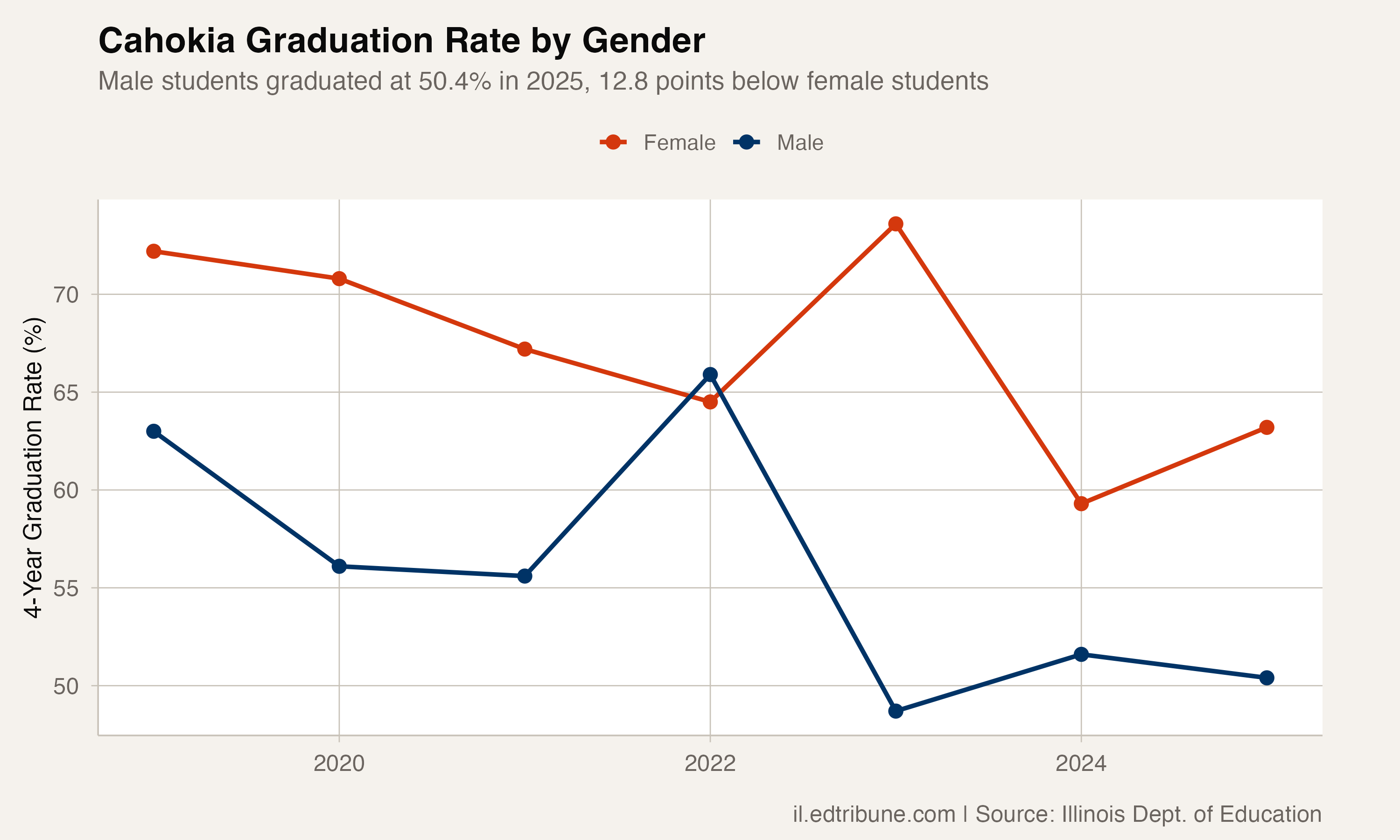
Cahokia CUSD 187 posted the lowest four-year graduation rate in Illinois in 2025 at 56.7%, with male students at 50.4% and female students at 63.2%, a 12.8-point gap.
Grass Lake's new superintendent inherits a one-school district that grew while Illinois shrank, then stepped back from a recent peak.
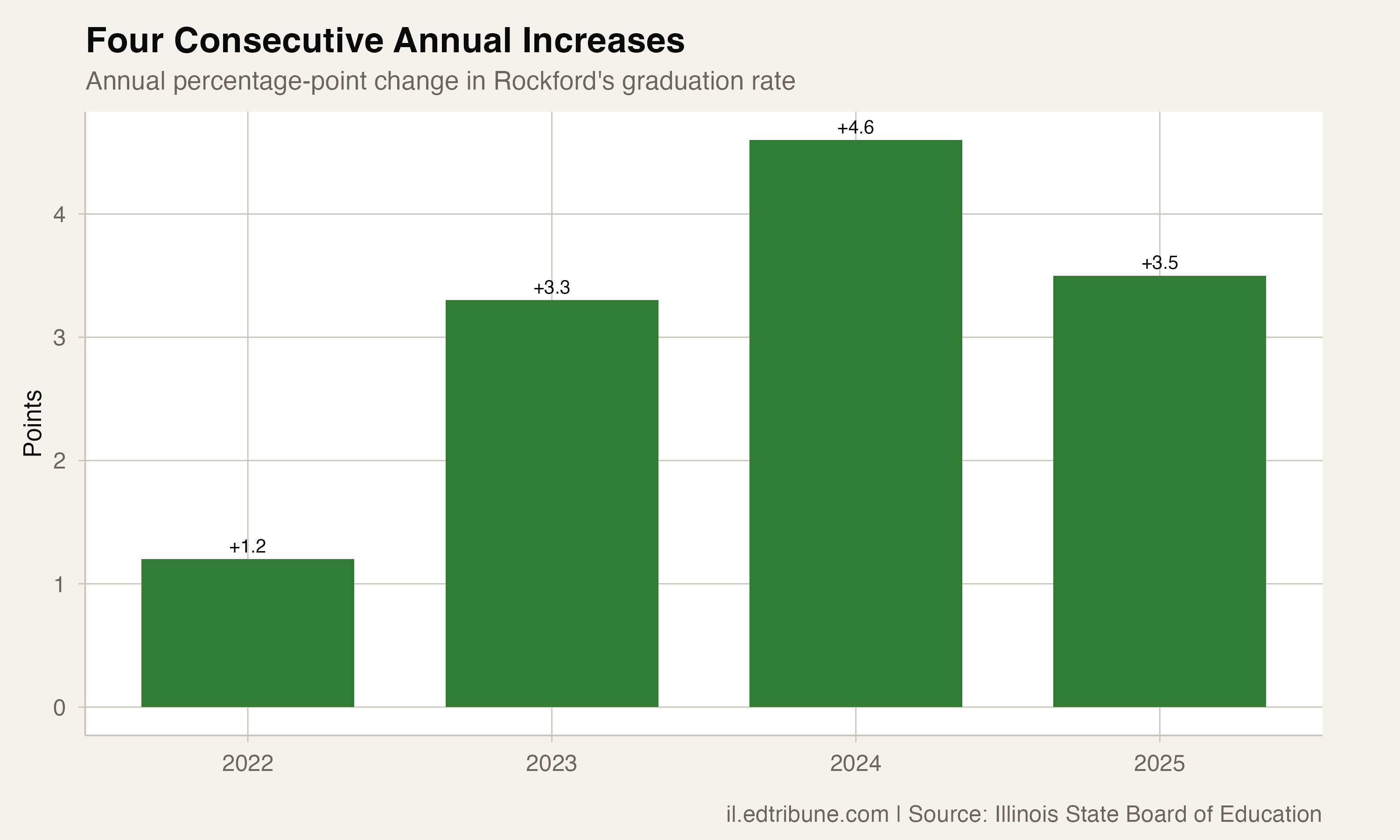
Rockford SD 205's four-year graduation rate rose from 64.4% in 2021 to 77.0% in 2025, a 12.6-point increase over four years.
Flossmoor School District 161 ended 2024-25 within 2 percent of its 2014-15 size while Illinois lost a tenth of its students. Its new superintendent says the opportunity is to build on that foundation.
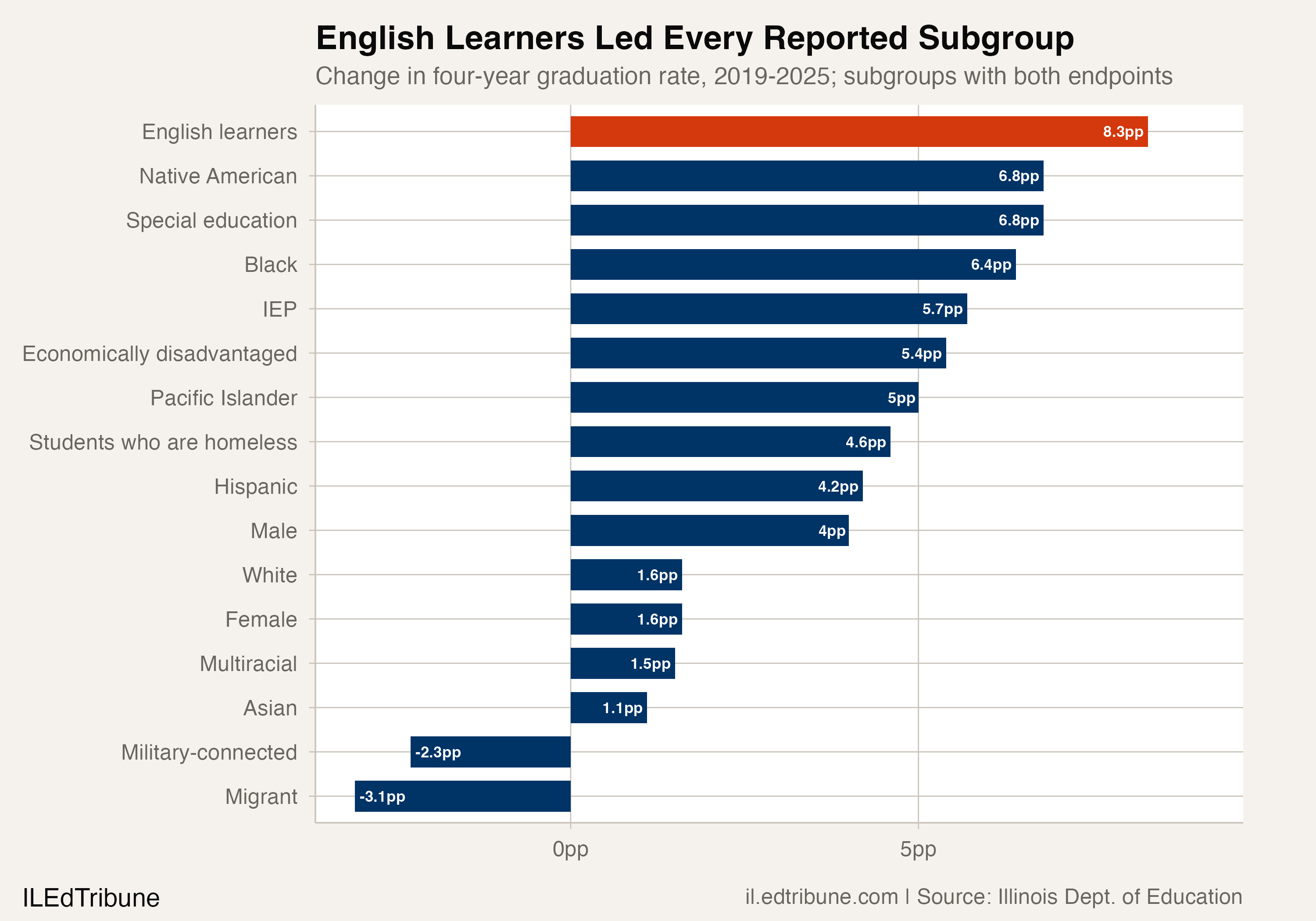
English learners gained 8.3 percentage points in Illinois' four-year graduation rate from 2019 to 2025, leading every reported statewide subgroup with both endpoints and narrowing the gap with all students from 14.2 to 8.7 points.
Vicki King takes over a district that beat the statewide decline outright, then fell four years running. Its kindergarten class is half the size of its eighth grade.
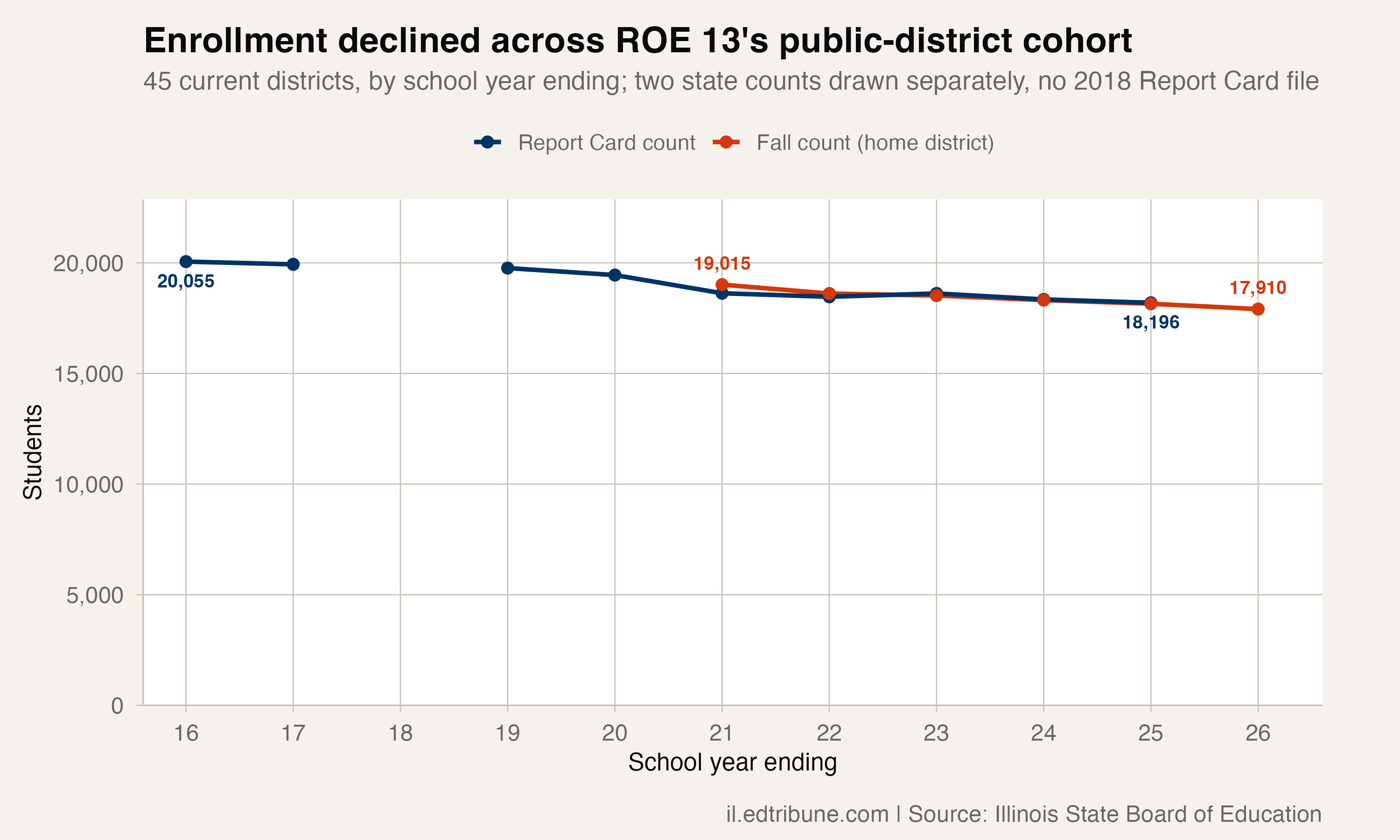
ROE 13's new regional superintendent inherits a service area where public-district enrollment fell 9.3% over a decade and kept falling in 2025-26.
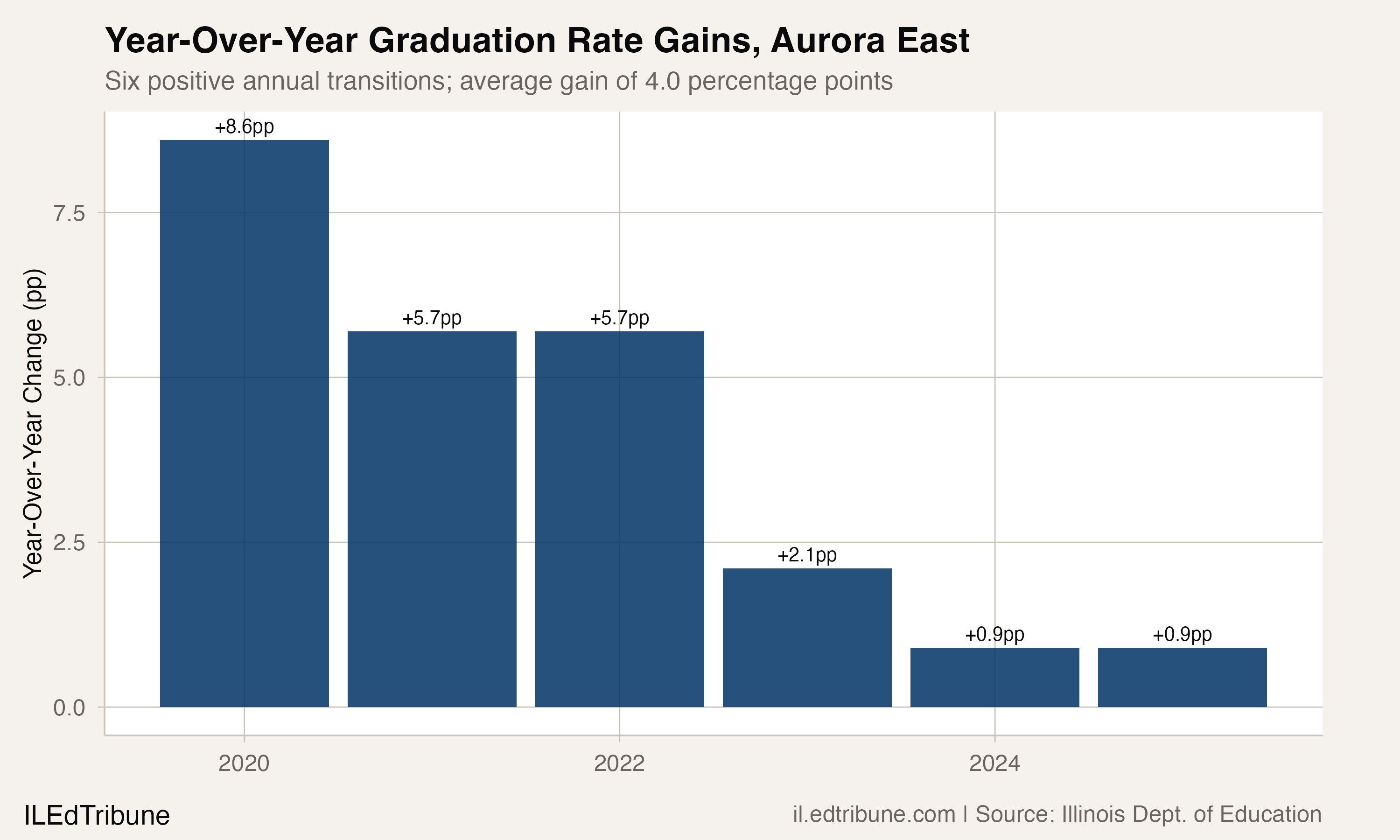
Aurora East USD 131 improved across six consecutive annual transitions, rising from 66.6% in 2019 to 90.5% in 2025.
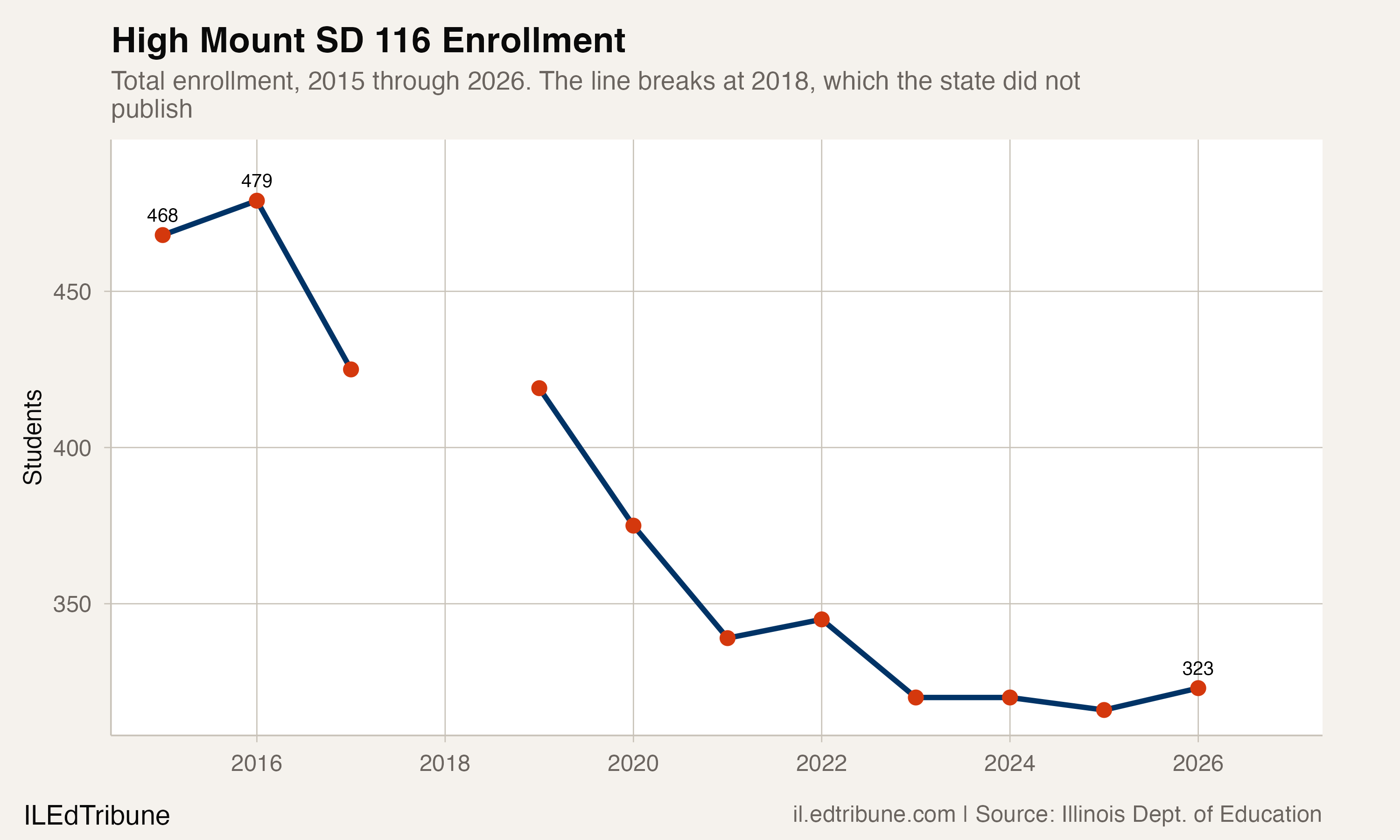
High Mount SD 116 is one school and 323 students. Its new superintendent has spent years in the building, and says her first priority is to listen anyway.
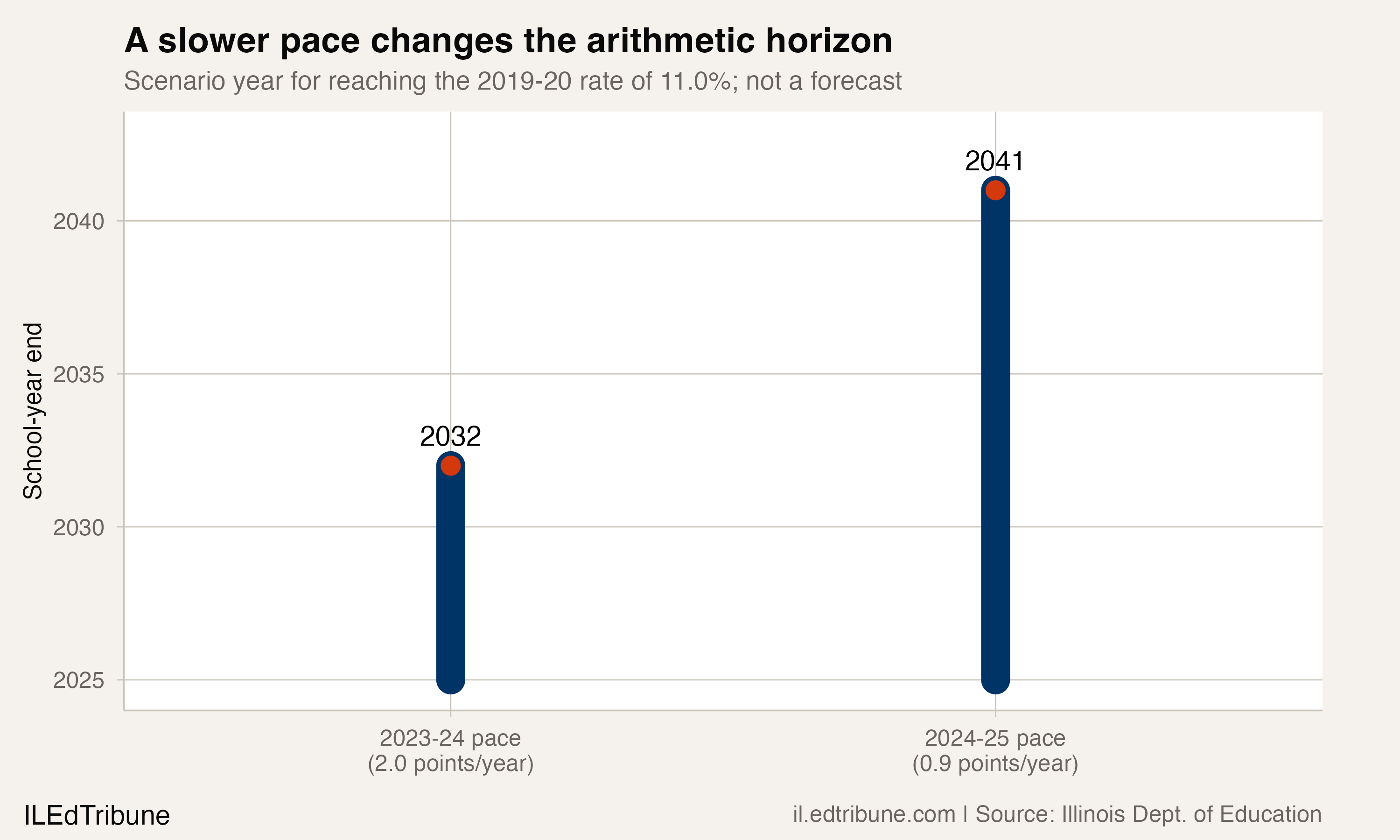
Illinois's chronic absenteeism rate improved by 0.9 percentage points in 2024-25, down from a 2.0-point improvement the year before.
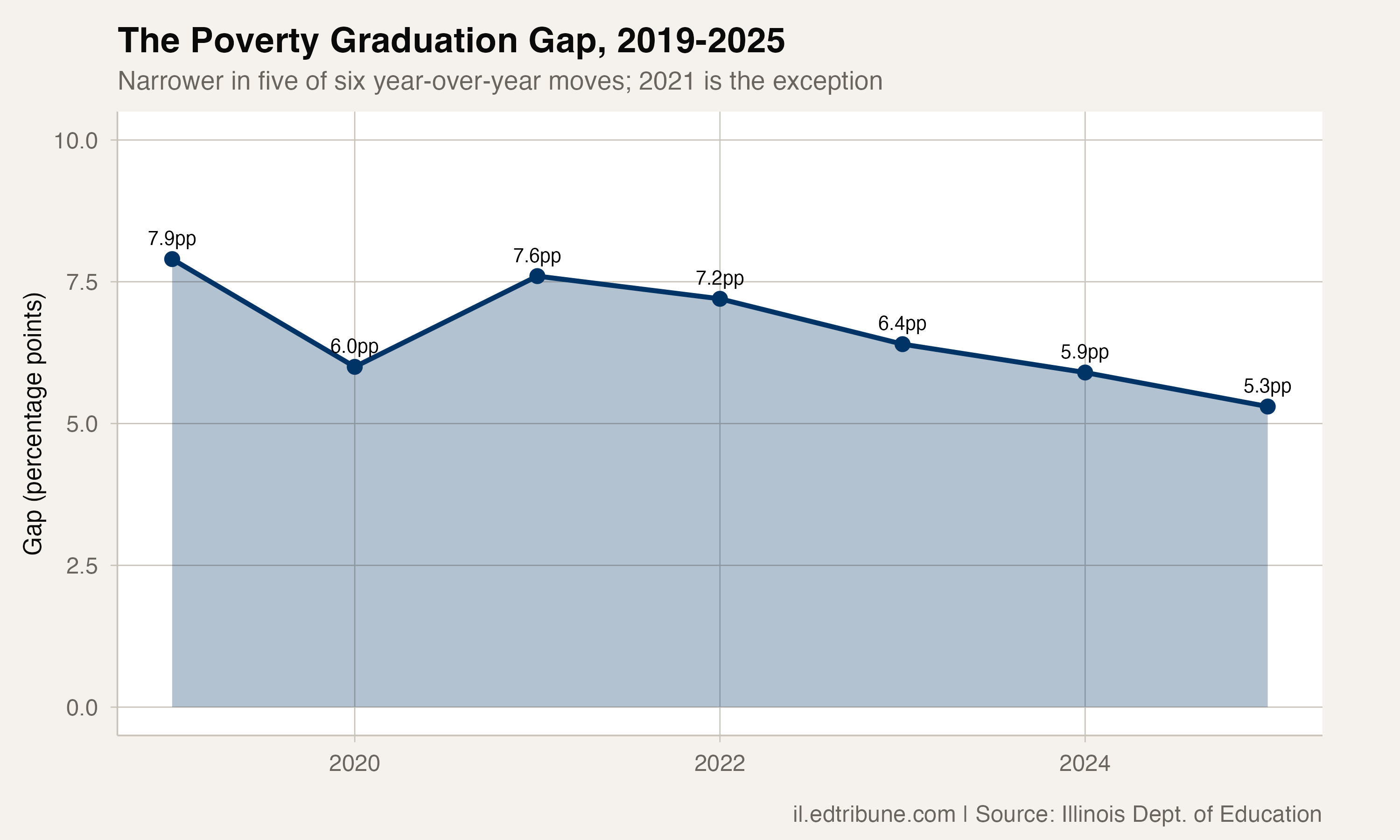
The gap between all Illinois students and economically disadvantaged students narrowed from 7.9 to 5.3 percentage points between 2019 and 2025, a 33% reduction built on a 5.4-point gain for economically disadvantaged students against 2.8 points for all students.
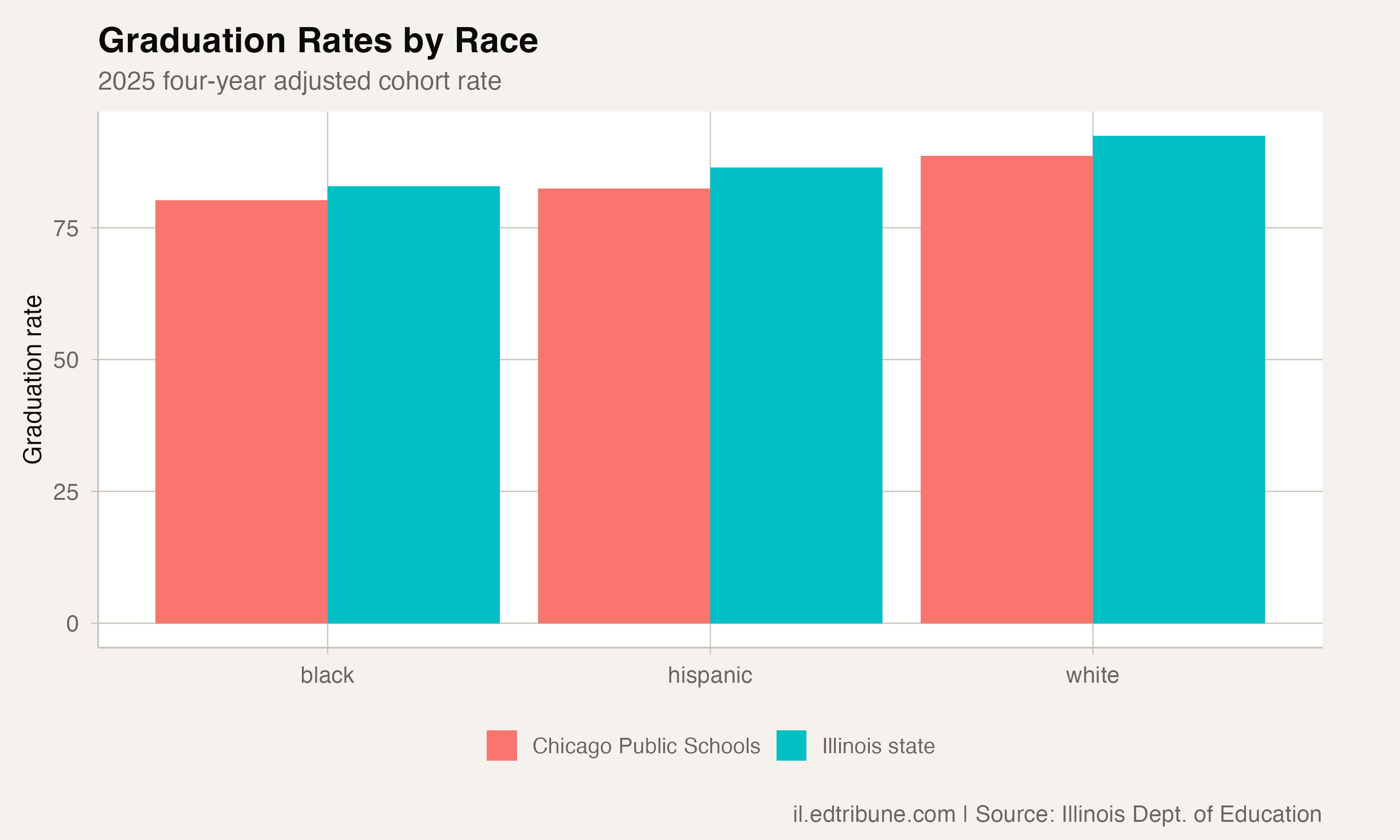
Chicago Public Schools graduated 82.5% of students in 2025, up 6 points since 2019 but still trailing the state average by 6.5 points. CPS's White-Black gap is narrower than the state's.
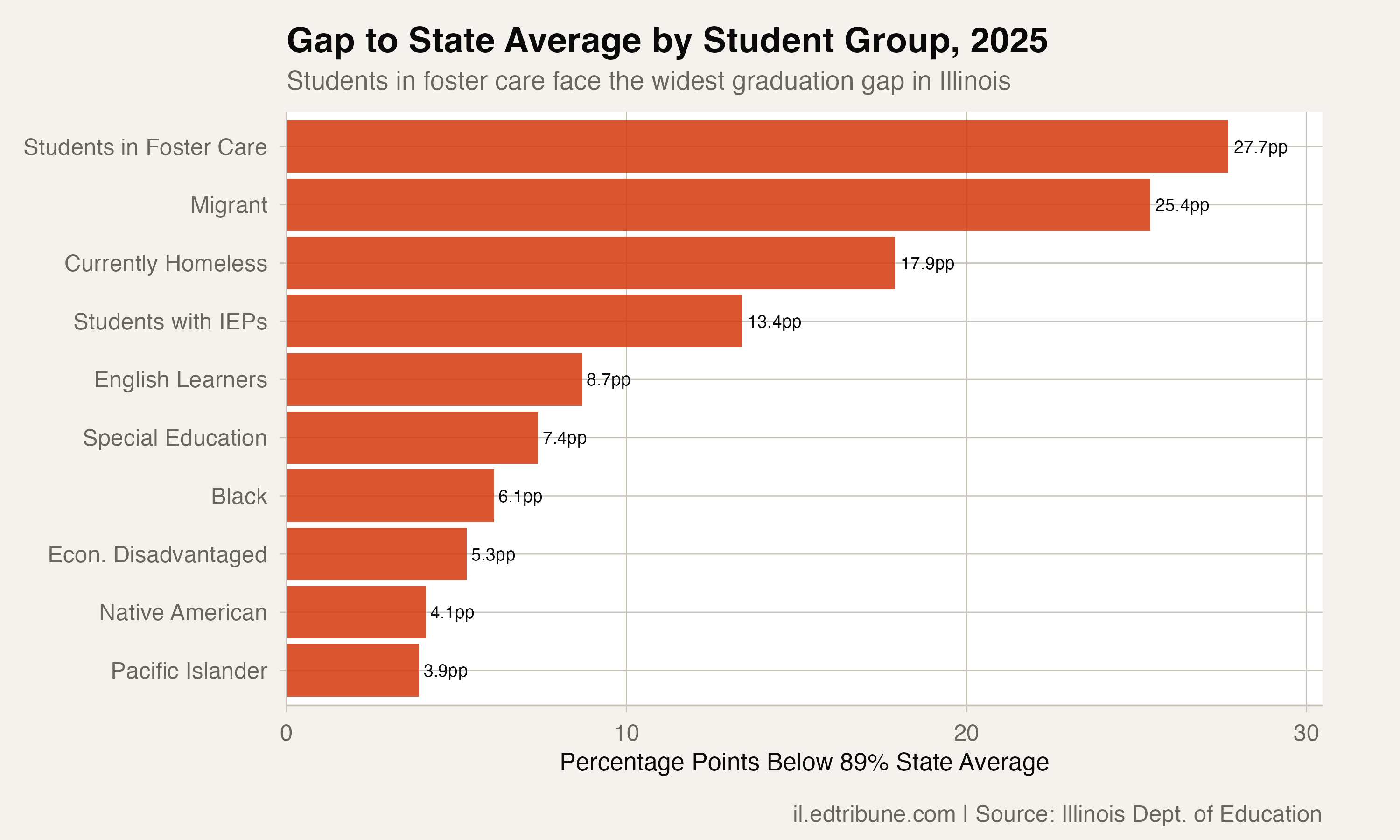
Students in foster care graduate at 61.3% in Illinois, nearly 28 points below the state average, the widest gap of any student group. In Chicago, the rate drops to 43.9%.
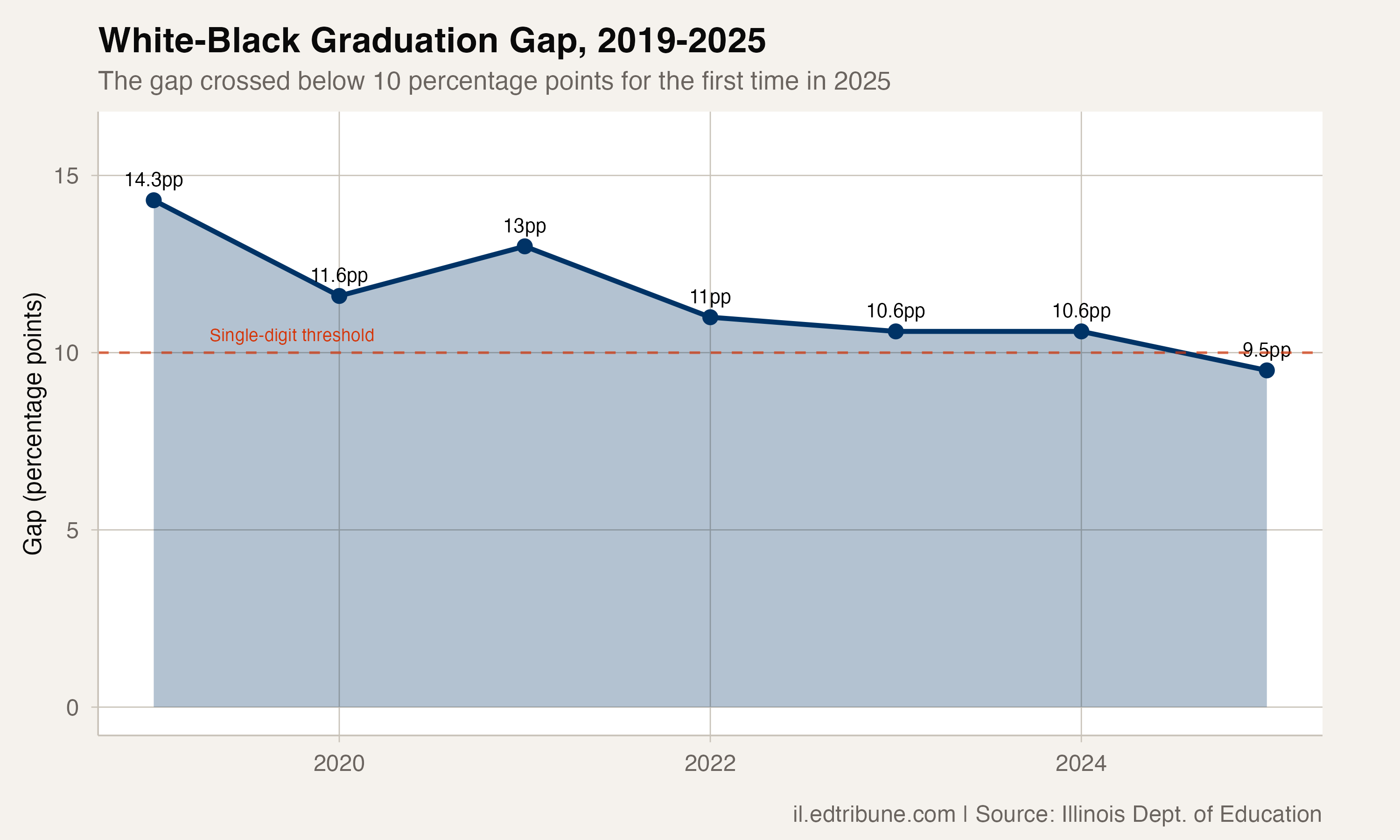
Black students' graduation rate gained 6.4 points from 2019 to 2025, narrowing Illinois' white-Black gap from 14.3 to 9.5 points.