Correction (October 1, 2026): The July correction below compared the state's 2025-26 fall enrollment count with a 2024-25 figure from a different state count. Measured on the fall count in both years, Brussels enrollment fell from 109 students to 85, a decline of 24 students, or 22.0%, not 18 (17.5%). The long-term comparison now runs from 2014-15 to 2024-25 on the Report Card count, a decline of 21 students (16.9%), in place of the 39-student, 31.5% decline previously reported. The 2025-26 total of 85 students, the school-level figures and the student-group shares are unchanged.
Correction (July 25, 2026): An earlier version said enrollment rose 1.2% from 2025 to 2026. When this article was published, the state had not yet released a 2025 enrollment file, so the comparison was actually drawn against 2024. With the 2025 file now published, enrollment fell from 103 students to 85 over that year, a decline of 18 students. The 2026 enrollment figure, the change since 2015, and the school-level and student-group figures are unchanged.
Pam Long has taken over a district small enough that its size is part of the job description.
The Illinois Report Card lists Long as current superintendent of Brussels CUSD 42↗ET, and Long confirmed in a written response to EdTribune that she would step into the superintendent role on July 1. Her June 23 email signature identified her as incoming superintendent and elementary principal.
"Brussels CUSD #42 has been my professional home for many years," Long said. "What drew me to the superintendent position was the opportunity to build on the district's strong foundation and help shape its future."
That continuity matters in a district where leadership is close to daily school life. The district's staff page lists Long as elementary principal, special education coordinator and athletic director, while the same page identifies Lori Franke-Hopkins as superintendent and junior high-high school principal.
Listening First
Long described the transition less as a change of direction than as a continuation of work inside a community she already knows.
"As both an educator and community member, I care deeply about our students and believe in the unique opportunities that a small school district can provide," she said.
Her first priority, she said, is listening. Long said she wants to keep gathering input from students, staff, families and community members as the district moves forward.
"I remain focused on providing a safe and supportive learning environment for students, supporting and valuing our staff, maintaining strong communication with families, and ensuring we continue to offer high-quality academic and extracurricular opportunities for all students," Long said.
That focus echoes a May district message from Long, in which she wrote that she was looking forward to the year ahead as incoming superintendent and to building relationships with students, families and staff.
A District Where Scale Is Personal
Brussels enrolled 85 students in 2025-26, according to the state's fall enrollment count, which assigns each student to a home district. On that count the district had 115 students in 2020-21, so it has lost 30 students, or 26.1%, over five years, while the statewide fall count fell 3.8%. The longer Illinois Report Card series, which runs through 2024-25, shows the same direction: Brussels went from 124 students in 2014-15 to 103, a decline of 21 students, or 16.9%, against a statewide decline of 10.0%.
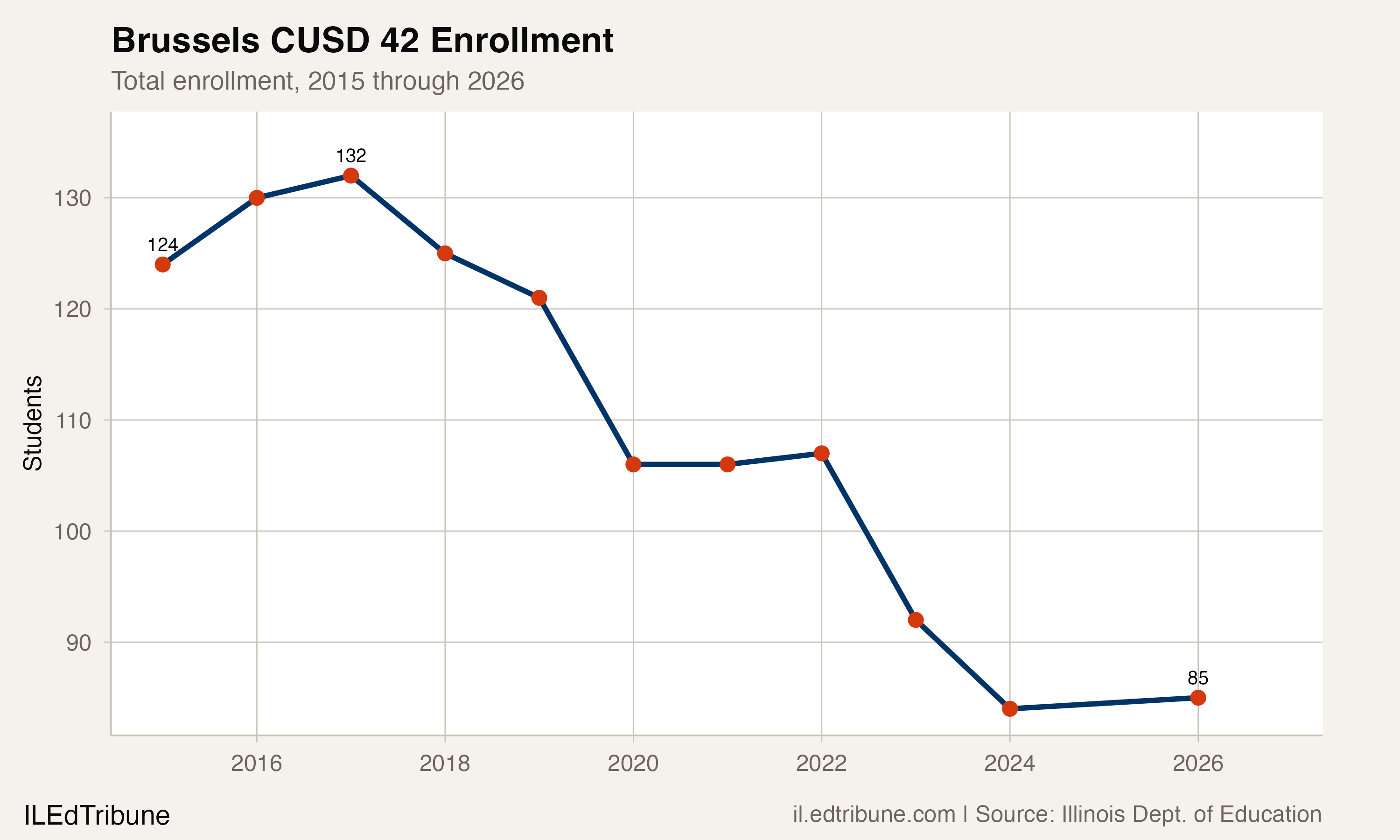
In the latest year, measured on the fall count at both ends, enrollment moved from 109 students to 85, a decline of 24 students, or 22.0%. In a district this size, a change of a few families moves the percentage sharply, which makes Long's emphasis on relationships part of the operating reality of the district.
"One of the greatest strengths of Brussels CUSD #42 is our size," Long said. "Our staff know students personally, build meaningful relationships, and provide individualized support that helps students thrive."
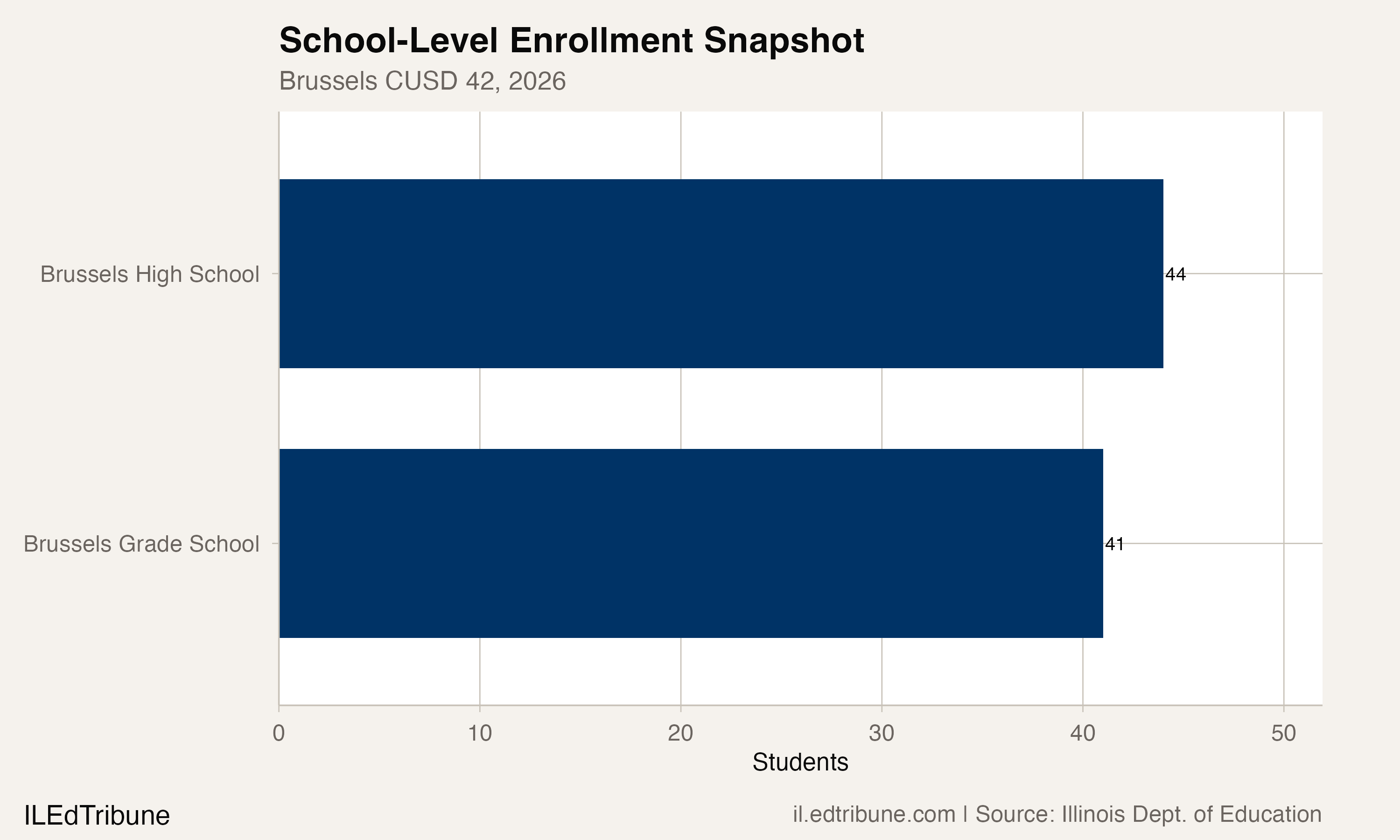
The district's current-year school-level rows show 44 students at Brussels High School and 41 at Brussels Grade School. The student-group data also show a district where 37.6% of students are identified as low income, the state's reported category, and 15.3% are identified for special education.
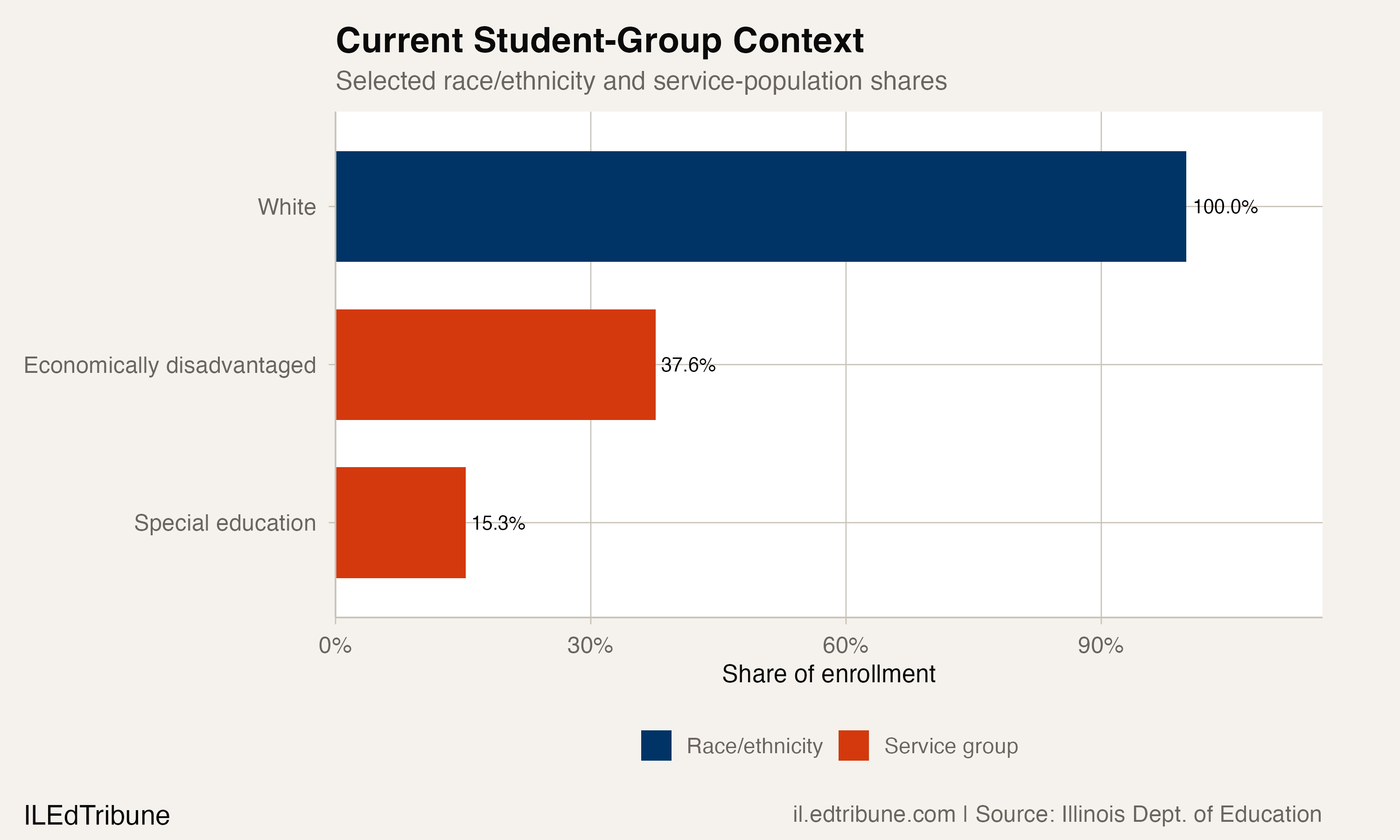
Service-population categories can overlap, so those shares should not be added together. They do suggest why a small district leader's work often moves across academics, student support, staffing and family communication at the same time.
The School as Community Center
Long's answer to what readers should understand about Brussels came back to the district's role beyond the classroom.
"Our school is also the heart of the community," she said. "It brings people together, preserves local traditions, and creates opportunities for students, families, and community members to connect."
She closed that answer with a phrase that fits the tone of the transition: "While we may be a small district we are mighty, and are rich in commitment, pride, and support for one another."
The operating context is practical. Long has taken on the superintendent role in a district split between Brussels High School and Brussels Grade School, with fewer than 100 students in the 2025-26 fall count and a long-running decline from its 2016-17 Report Card high point of 132. But her stated priority is not a turnaround slogan. It is listening, communication and keeping the district's small scale close enough to students to matter.
Enrollment trends through 2024-25 use the Illinois Report Card count. Figures for 2025-26, and every change ending in 2025-26, use the Illinois State Board of Education's Fall Enrollment Report on both ends; the two counts are never subtracted from each other.
Detailed code that reproduces the analysis and figures in this article is available exclusively to EdTribune subscribers.
Discussion
Sign in to join the discussion.
Loading comments...